Kathmandu
Monday, July 13, 2026





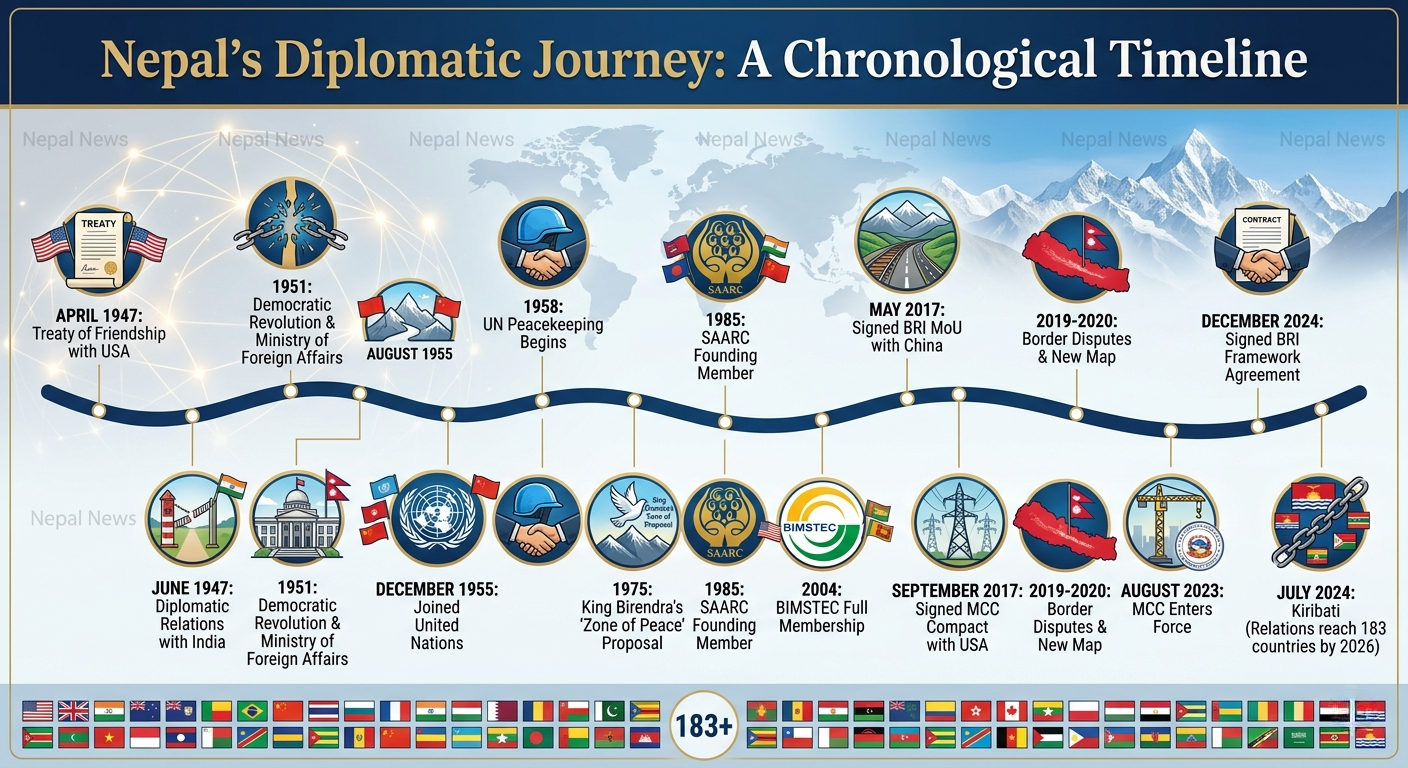
KATHMANDU: Nepal’s diplomatic relations transformed after the 1951 democratic revolution ended Rana isolationism and established an independent Ministry of Foreign Affairs.
Post-1940s, Nepal adopted non-alignment, balancing ties with India (via the 1950 Treaty) and China while expanding globally.
It joined the UN in 1955, pursued diversification under Kings Mahendra and Birendra, proposed a Zone of Peace, founded SAARC (1985), joined BIMSTEC (2004), and engaged in UN peacekeeping.
Nepal navigated controversies like border disputes with India, BRI with China, and MCC with the US, while voting in UN forums on sovereignty, development, and peace, maintaining “friendship with all, enmity with none” as a landlocked nation.
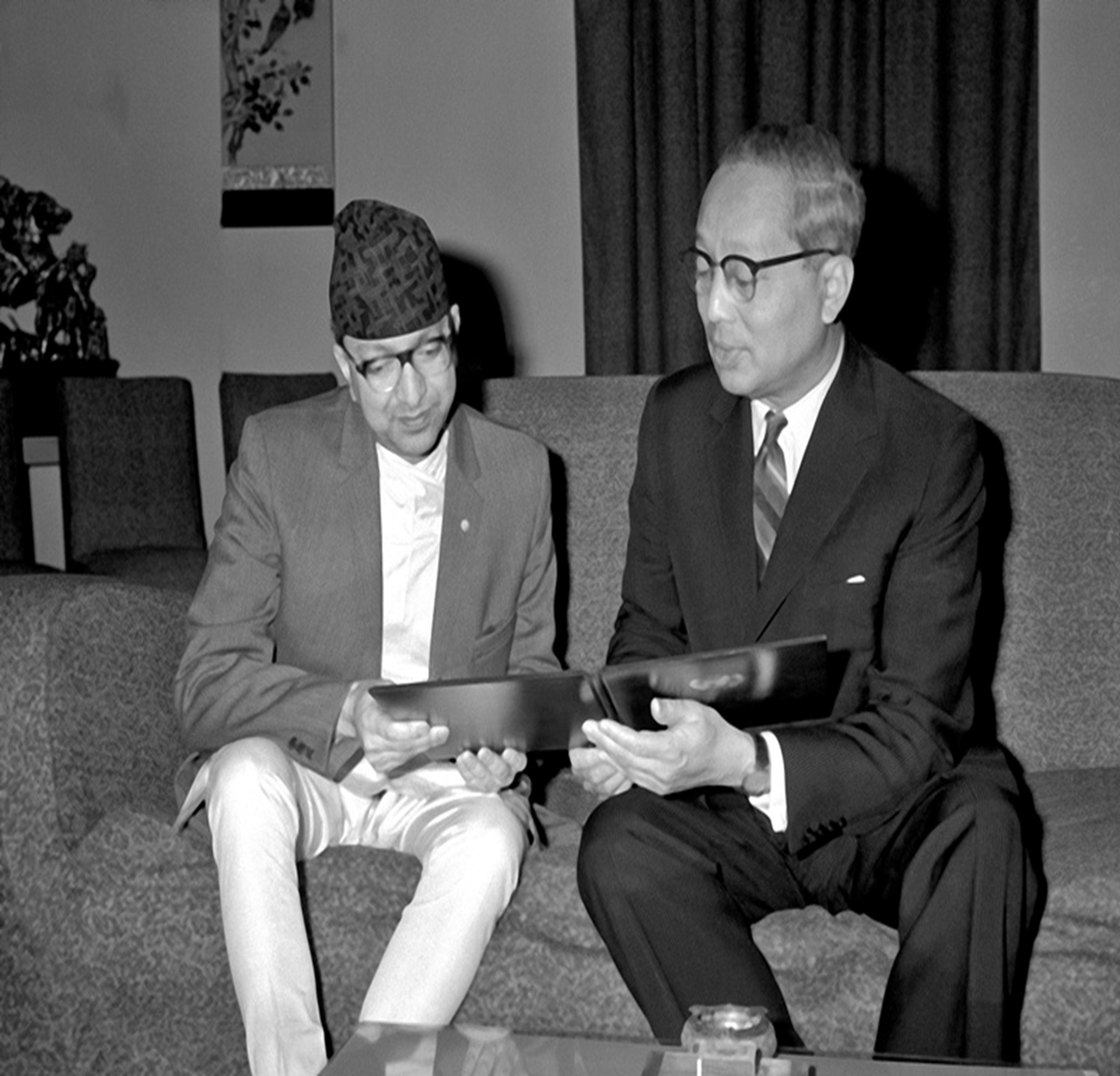
The then King Mahendra with UN Secretary-General U Thant at the Royal Palace in 1967. Photo courtesy: United Nations Nepal/Facebook
This Nepal News timeline chronicles the highs and lows of Nepal’s diplomacy, highlighting its interactions with other countries and participation in international forums.
April 25, 1947: Nepal signed the Treaty of Friendship and Commerce with the United States in Kathmandu. This marked Nepal’s first formal diplomatic opening to a major Western power beyond British influence, paving the way for US aid and technical support in the post-WWII era. The agreement laid groundwork for diversified foreign relations, though it remained limited until the 1950s democratic shifts. It signaled Nepal’s intent to break isolation without alienating immediate neighbors.
June 13, 1947: Nepal established diplomatic relations with newly independent India. This foundational step created the “special relationship” characterized by open borders, free movement, and trade reciprocity but sowed seeds for future asymmetries that later fueled controversies over the 1950 Treaty and border issues. Early exchanges focused on security and economic cooperation amid Partition’s aftermath.
April 20, 1949: Diplomatic relations were formally established with France. This early European link supported Nepal’s post-isolation outreach, fostering cultural and educational exchanges while diversifying beyond South Asia. It reflected Nepal’s cautious expansion of global ties during the late Rana period.
July 31, 1950: The Treaty of Peace and Friendship was signed in Kathmandu between Nepal’s last Rana Prime Minister Mohan Shumsher Jang Bahadur Rana and Indian Ambassador Chandeshwar Prasad Narayan Singh. This landmark agreement defined reciprocal security, trade, and residency rights, creating a unique “special relationship” with India that influenced Nepal’s foreign policy for decades. Critics later viewed it as unequal, sparking ongoing debates and calls for revision amid 2020 border tensions. A parallel trade and commerce treaty was signed the same day.
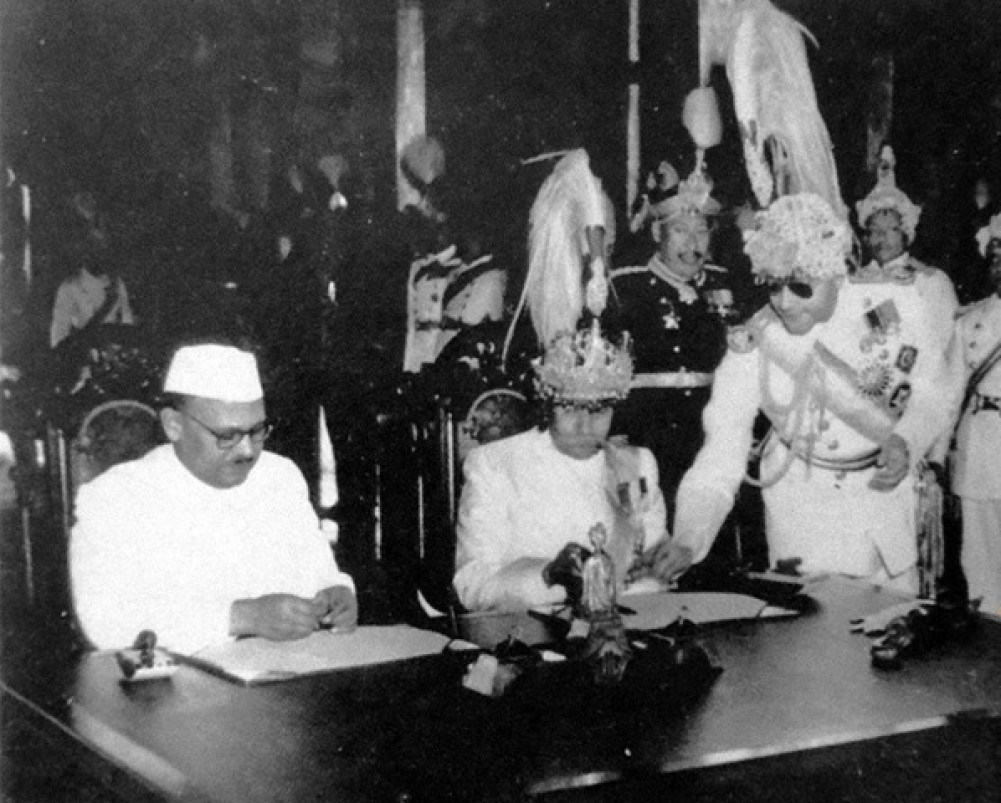
The Prime Minister of Nepal, Mohan Shamsher Jang Bahadur Rana (right chair), and the Indian Ambassador to Nepal, Chandeshwar Prasad Narayan Singh (left chair), signing the treaty, July 31, 1950
1951: Following the democratic revolution that overthrew the Rana regime, Nepal established an independent Ministry of Foreign Affairs. This institutional milestone enabled rapid diplomatic expansion and active multilateral engagement, shifting from Rana-era isolation to proactive global outreach under the new democratic framework.
February 16, 1948 (formalized post-1947 recognition): Diplomatic relations with the United States were fully operationalized, with Nepal establishing a legation in Washington. This built on the 1947 treaty, leading to the US Embassy opening in Kathmandu on August 6, 1959, and long-term development aid partnerships.
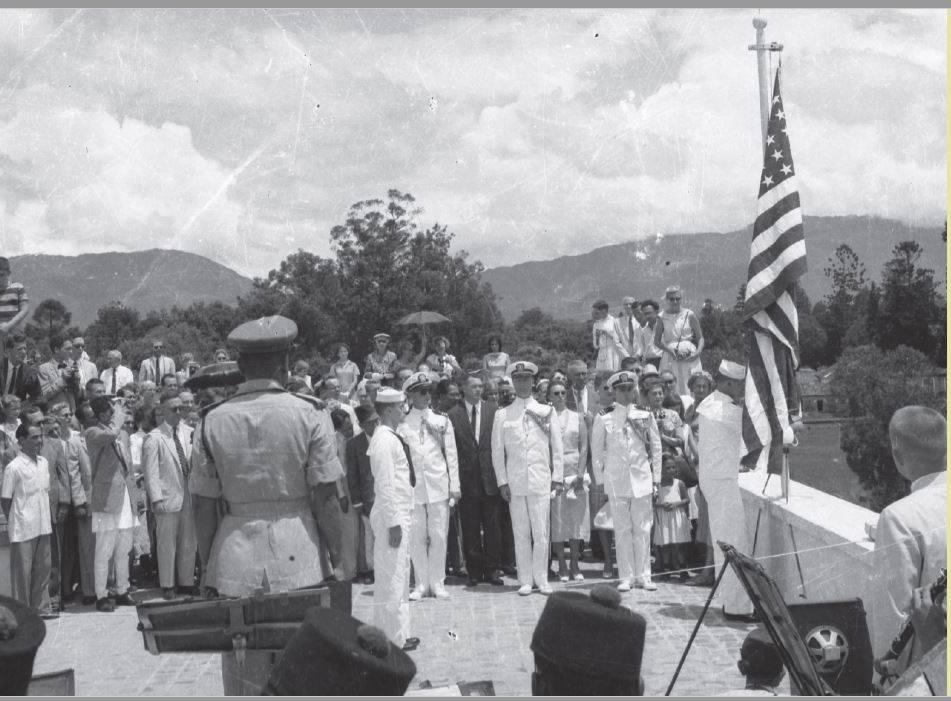
The first US Embassy building was established in Kantipath in 1959. Photo courtesy: US Embassy/Facebook
August 1, 1955: Nepal established diplomatic relations with the People’s Republic of China in Kathmandu via an agreement based on the Five Principles of Peaceful Coexistence (Panchasheel). Signed by Nepali Principal Royal Adviser Sardar Gunja Man Singh and Chinese Ambassador Yuan Zhongxian, this balanced Nepal’s India-centric policy and recognized Tibet as part of China, setting the stage for later border agreements and BRI cooperation.
December 14, 1955: Nepal was admitted to the United Nations through UNGA Resolution 995(X). The Nepalese map submitted was accepted without objection from India or China, marking Nepal’s full entry into multilateral diplomacy and enabling future UNSC candidacies and peacekeeping roles.
July 20, 1956: Diplomatic relations were established with the Soviet Union (later Russia). This Cold War-era move further diversified Nepal’s ties beyond Western and immediate neighbors, opening avenues for technical and economic cooperation.
September 1, 1956: Relations with Japan were formalized. This partnership grew into significant development assistance, including technical aid and infrastructure support, strengthening East Asian links.
July 1, 1957: Diplomatic relations established with Sri Lanka, fostering early South Asian solidarity that later contributed to SAARC’s formation.
July 16, 1957: Relations with Egypt were established, bolstering Nepal’s alignment with the Non-Aligned Movement (NAM).
April 4, 1958: Diplomatic relations with (West) Germany were formalized, expanding European economic ties.
1958 (exact deployment: mid-1958): Nepal deployed its first five military observers to the UN Observer Group in Lebanon (UNOGIL). This initiated Nepal’s storied UN peacekeeping involvement, eventually contributing over 158,000 personnel across 44+ missions and establishing it as one of the world’s top troop contributors.
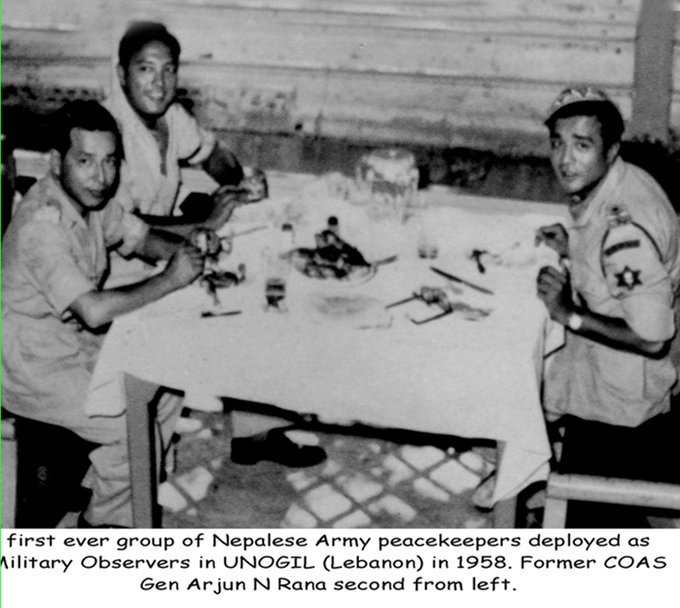
Photo Courtesy: History of Nepalese Army/Book
April 28, 1960: Nepal and China signed the Treaty of Peace and Friendship in Beijing, complementing the 1950 India treaty and formalizing balanced neighborhood policy amid Himalayan border sensitivities.
1961 (border agreement follow-up to 1960 treaty): The Nepal-China Border Agreement resolved most Himalayan boundary disputes peacefully through joint commissions, a rare success in neighborhood diplomacy that contrasted with later India stalemates.
December 27, 1969 – December 27, 1970: Nepal served its first term as a non-permanent member of the UN Security Council (Asian Group). Elected with strong support (120 votes), Nepal actively contributed to peace and security debates, enhancing its multilateral profile during the Cold War.
February 25, 1975: At the farewell ceremony for dignitaries attending his coronation, King Birendra formally proposed Nepal as a Zone of Peace (ZoP). The initiative sought to neutralize regional rivalries through non-alignment and demilitarization pledges; over 130 countries eventually supported it, though India remained skeptical, viewing it as a challenge to the 1950 Treaty framework.
December 27, 1988 – December 27, 1989: Nepal’s second UNSC non-permanent term. Nepal continued its active role in peacekeeping, development, and decolonization agendas, solidifying its reputation as a constructive middle power.
December 8, 1985: SAARC Charter signed in Dhaka; Nepal was a founding member. The organization aimed at regional cooperation in trade, poverty alleviation, and connectivity, with the secretariat later headquartered in Kathmandu.
November 2–4, 1987: Nepal hosted the 3rd SAARC Summit in Kathmandu under King Birendra. Focus on food security and economic issues; outcomes included the South Asian Food Security Reserve (1988), marking Nepal’s early leadership in regional forums.
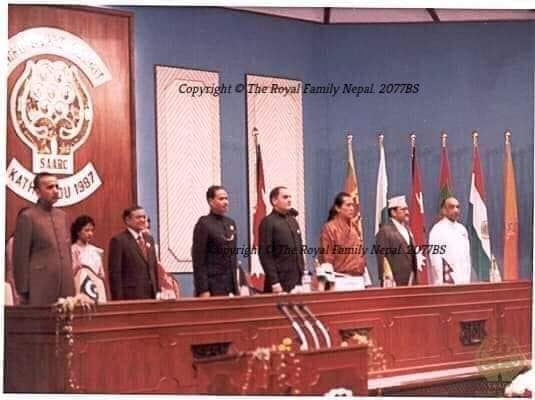
Third SAARC summit was held in Kathmandu, Nepal in November 2-4, 1987. Photo courtesy: The Royal Family Nepal/Facebook
December 19, 1998: Nepal granted observer status in BIMSTEC (then BIMST-EC) during the second ministerial meeting in Dhaka. This positioned Nepal for future full membership and Bay of Bengal connectivity.
January 4–6, 2002: Nepal hosted the 11th SAARC Summit in Kathmandu under PM Sher Bahadur Deuba. Emphasis on poverty alleviation and integration; however, post-summit progress slowed due to India-Pakistan tensions, foreshadowing later stalemates.
February 8, 2004: Nepal became a full BIMSTEC member (along with Bhutan). This shifted focus toward multi-sectoral cooperation in energy, trade, and connectivity, bypassing SAARC’s India-Pakistan gridlock.
July 31, 2004: Nepal participated in the first BIMSTEC Summit in Bangkok. Advanced initial multi-sectoral agendas, setting the tone for Nepal’s role in people-to-people and energy pillars.
November 26–27, 2014: Nepal hosted the 18th (and last fully functional) SAARC Summit in Kathmandu under PM K.P. Sharma Oli. Theme: “Deeper Integration for Peace and Prosperity.” An adopted energy cooperation framework, but India-Pakistan tensions caused an indefinite stalemate thereafter, with no summits held since.
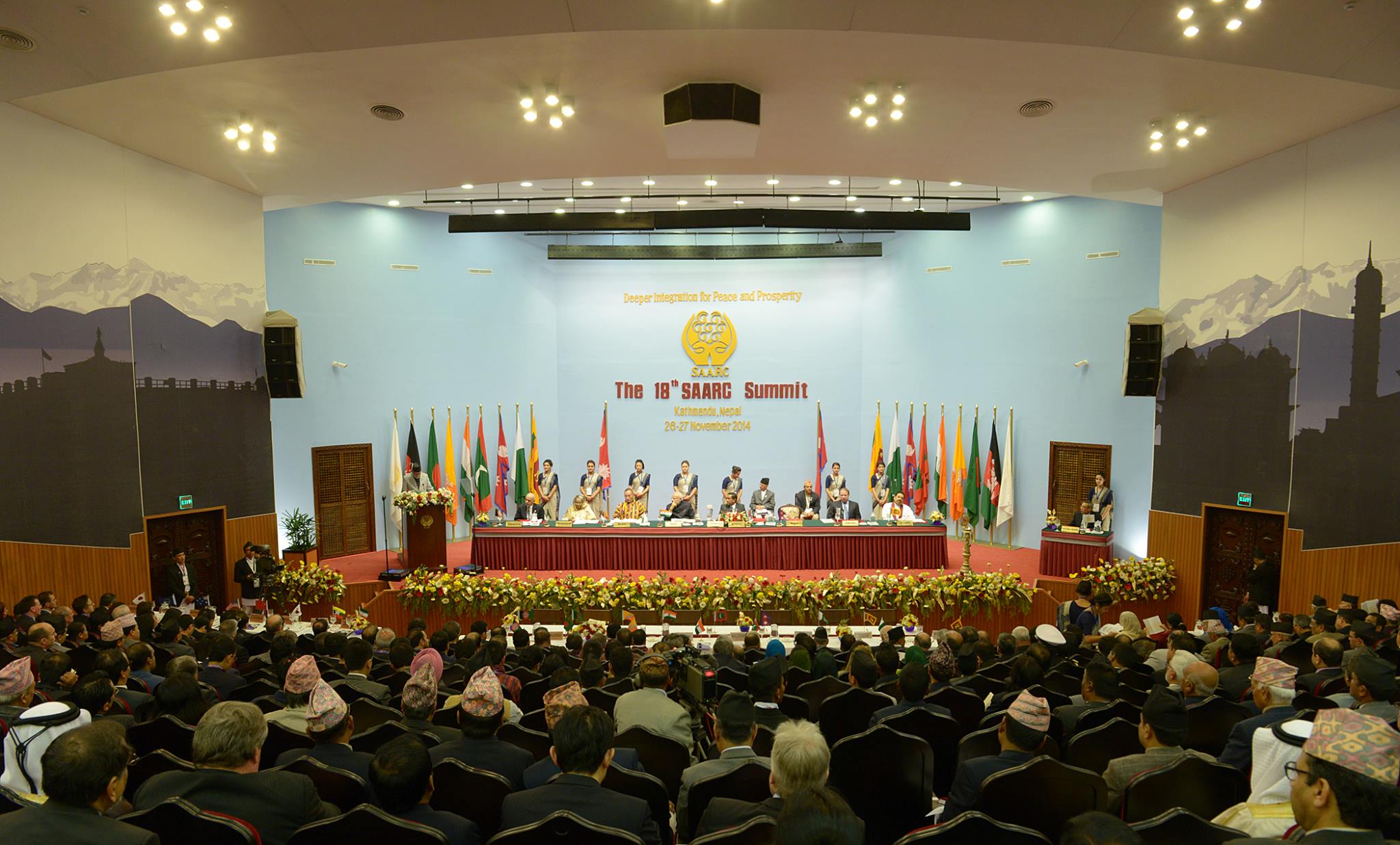
Photo courtesy: Ministry of Foreign Affairs/Facebook
May 12, 2017: Nepal signed the BRI MoU with China in Kathmandu. This opened potential infrastructure projects but sparked sovereignty and debt-trap debates; implementation stalled for years amid geopolitical balancing with India and the US.
September 14, 2017: Nepal signed the USD 500 million MCC Compact with the USA in Washington, DC, for energy and transport infrastructure. Aimed at benefiting 23+ million Nepalis, but immediately triggered domestic controversy over perceived US influence, sovereignty clauses, and links to Indo-Pacific strategy.
August 30–31, 2018: Nepal hosted the 4th BIMSTEC Summit in Kathmandu under PM K.P. Sharma Oli. Theme: “Towards a Peaceful, Prosperous, and Sustainable Bay of Bengal Region”; signed MoU on grid interconnection, advancing connectivity amid SAARC stalemate.
November 2019: India released its new political map incorporating Kalapani, Lipulekh, and Limpiyadhura as Indian territory post-Article 370 revocation. Nepal issued strong diplomatic protests, citing the 1816 Sugauli Treaty, escalating the long-dormant border dispute into a major bilateral stalemate.
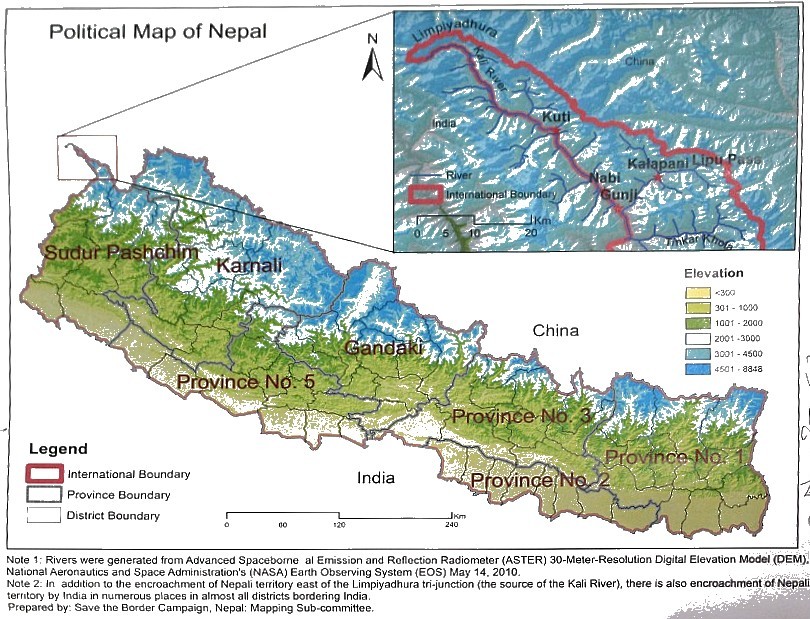
December 2019 – January 2020: Nepal’s government and Parliament formally objected to India’s map via diplomatic notes. PM K.P. Sharma Oli vowed resolution through historical claims; technical-level talks were proposed but yielded no breakthrough, deepening the diplomatic freeze.
May 18, 2020: The Nepal government cabinet endorsed and published its new political map, including Limpiyadhura, Lipulekh, and Kalapani as Nepali territory. This unilateral cartographic move, in response to Indian road inauguration, triggered sharp Indian rejection as “unilateral” and crossing a red line.
June 13, 2020: Nepal’s House of Representatives unanimously passed the constitutional amendment incorporating the new map into the national emblem and coat of arms. The Upper House followed on June 18; India called it non-constructive, leading to a complete stalemate in boundary talks with no high-level bilateral visits for years afterward.
February 27, 2022: Nepal Parliament ratified the MCC Compact with a 12-point interpretive declaration (unanimous cross-party support under then-PM Sher Bahadur Deuba). The declaration addressed sovereignty concerns; however, the ratification process had seen massive street protests and political divisions since the 2017 tabling.
March 2, 2022: Nepal voted in favor of UNGA Resolution ES-11/1 condemning Russia’s invasion of Ukraine and demanding withdrawal. This upheld principles of sovereignty and territorial integrity, consistent with Nepal’s UN voting record on similar issues (e.g., Palestine).
August 30, 2023: The MCC Nepal Compact officially entered into force. Implementation of electricity transmission and road projects began despite earlier controversies, marking a major US development partnership while Nepal continued BRI balancing.
1733219123.jpg)
Nepal and China signed the BRI Framework Agreement in Beijing during PM K.P. Sharma Oli’s visit. Photo courtesy: Oli’s Secretariat
December 4, 2024: Nepal and China signed the BRI Framework Agreement in Beijing during PM K.P. Sharma Oli’s visit. This advanced project implementation (after 2017 MoU delays) on ten priority infrastructure initiatives, including Trans-Himalayan connectivity, amid ongoing debates on financing and geopolitical implications.
Additional diplomatic relations establishments
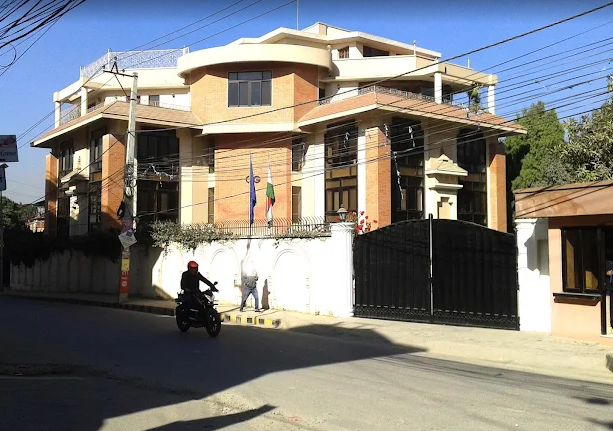
Honorary Consulate of Hungary in Kathmandu. Photo courtesy: Google Maps
January 15, 1961: Hungary.
May 1, 1961: New Zealand.
July 1, 1961: Afghanistan.
January 1, 1962: Argentina.
November 15, 1962: Turkey.
August 18, 1963: Lebanon.
August 19, 1963: Belgium.
December 14, 1964: Iran.
January 18, 1965: Canada.
August 20, 1965: Jordan.
December 15, 1967: Denmark.
April 15, 1968: Bulgaria.
April 20, 1968: Romania.
April 29, 1968: Algeria.
May 13, 1968: Spain.
October 30, 1968: Iraq.
March 25, 1969: Singapore.
July 11, 1969: Sudan.
February 26, 1970: Syria.
April 15, 1971: Ethiopia.
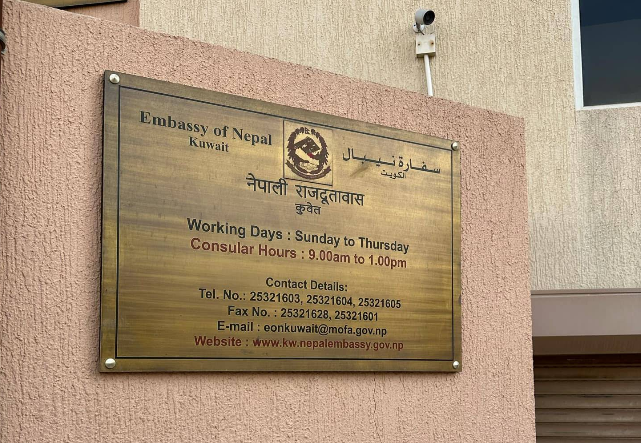
February 25, 1972: Kuwait.
April 8, 1972: Bangladesh.
May 23, 1972: Albania.
January 26, 1973: Norway.
May 15, 1974: North and South Korea.
September 21, 1974: Finland.
January 10, 1975: Tanzania.
February 18, 1975: Morocco.
March 25, 1975: Cuba.
April 18, 1975: Cambodia.
May 15, 1975: Vietnam.
June 3, 1975: Kenya.
November 25, 1975: Mexico.
November 27, 1975: Luxembourg.
December 20, 1975: Nigeria.
December 30, 1975: Libya.
January 28, 1976: Peru.
February 7, 1976: Brazil.
September 1, 1976: Portugal.
January 13, 1977: Bahrain, Oman, Qatar, UAE.
March 15, 1977: Saudi Arabia.
August 16, 1977: Costa Rica.
August 1, 1980: Maldives.
August 18, 1980: Cyprus.
February 12, 1981: Mauritius.
May 25, 1981: Iceland.
June 3, 1983: Bhutan.
September 10, 1983: Holy See.
September 25, 1983: Malta.
February 3, 1984: Brunei.
February 15, 1984: Panama.
April 14, 1984: Tunisia.
October 24, 1984: Somalia.
November 27, 1984: Zimbabwe.
June 17, 1985: Gabon.
December 25, 1985: Yemen.
June 12, 1986: Fiji.
September 10, 1986: Zambia.
September 30, 1986: Mozambique.
October 2, 1986: Nicaragua.
October 10, 1986: Seychelles.
April 27, 1987: Venezuela.
May 6, 1987: Colombia.
May 20, 1987: Bolivia.
April 20, 1992: Estonia and Latvia.
January 15, 1993: Ukraine.
March 26, 1993: Armenia and Kyrgyzstan.
July 19, 1993: Belarus.
July 20, 1993: Moldova.
March 4, 1994: Slovakia.
June 22, 1994: Guyana.
July 28, 1994: South Africa.
February 28, 1995: Azerbaijan.
December 2, 1997: Slovenia.
January 6, 1998: North Macedonia.
February 6, 1998: Croatia.
August 19, 1999: Ireland.
January 12, 2000: Bosnia and Herzegovina.
February 8, 2005: Lithuania.
August 10, 2005: San Marino.
September 13, 2005: Tajikistan.
September 22, 2005: Georgia.
October 17, 2005: Turkmenistan.
June 21, 2006: Ecuador.
August 2, 2006: Paraguay.
August 8, 2006: Guatemala.
August 18, 2006: Honduras.
September 19, 2006: Vanuatu.
September 22, 2006: Andorra and DRC.
May 23, 2007: Haiti.
September 27, 2007: St. Vincent & Grenadines.
September 28, 2007: Dominican Republic.
January 8, 2009: Botswana.
November 19, 2009: Mali.
May 18, 2010: Lesotho.
July 18, 2011: Montenegro.
December 15, 2011: Solomon Islands.
March 26, 2012: Monaco.
April 18, 2012: Uruguay.
December 4, 2012: Mauritania.
December 11, 2012: Tuvalu.
March 28, 2013: Samoa.
April 12, 2013: Papua New Guinea.
June 30, 2015: Kazakhstan.
October 1, 2015: Jamaica.
May 12, 2016: Guinea.
September 21, 2016: El Salvador.
June 12, 2017: Uganda.
June 16, 2017: Ivory Coast.
July 14, 2017: Djibouti.
July 25, 2017: Antigua & Barbuda.
August 3, 2017: Cape Verde.
August 17, 2017: Liberia.
September 20, 2017: Niger.
October 31, 2017: Eritrea.
November 7, 2017: Bahamas.
November 24, 2017: Liechtenstein.
December 9, 2017: Angola.
December 29, 2017: Burkina Faso.
January 23, 2018: Benin.
January 26, 2018: Uzbekistan.
May 30, 2018: St. Kitts & Nevis.
June 6, 2018: Burundi.
July 20, 2018: Rwanda.
September 26, 2018: Madagascar.
October 11, 2018: Suriname.
March 22, 2019: Togo.
April 30, 2019: Equatorial Guinea.
May 9, 2019: Eswatini.
August 27, 2019: St. Lucia.
September 25, 2019: Ghana.
April 30, 2021: Dominica.
May 24, 2021: Gambia.
June 29, 2021: Sierra Leone.
December 8, 2021: Barbados.
February 11, 2022: Timor-Leste.
March 21, 2022: Palau.
March 28, 2022: South Sudan.
April 1, 2022: Belize.
June 16, 2022: Trinidad & Tobago.
February 16, 2023: Malawi.
May 4, 2023: Nauru.
June 22, 2023: Cameroon.
June 23, 2023: Marshall Islands.
March 1, 2024: Tonga.
July 17, 2024: Kiribati (reaching 183 relations by early 2026).
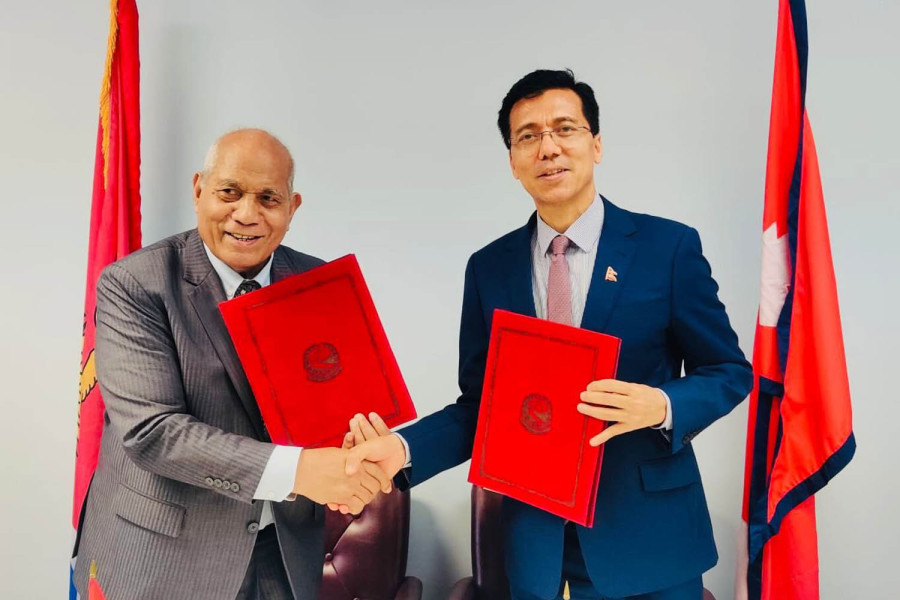
Ambassadors Lok Bahadur Thapa of Nepal and Teburoro Tito of Kiribati sign a joint communique at Nepal’s Permanent Mission to the United Nations in New York, marking the establishment of diplomatic relations. Photo courtesy: Nepal Mission to the UN/X