Kathmandu
Saturday, July 11, 2026





From trekking Nepal's highest trails to riding solo across remote mountain roads, Pabina Khadka has turned travel into a way of life.
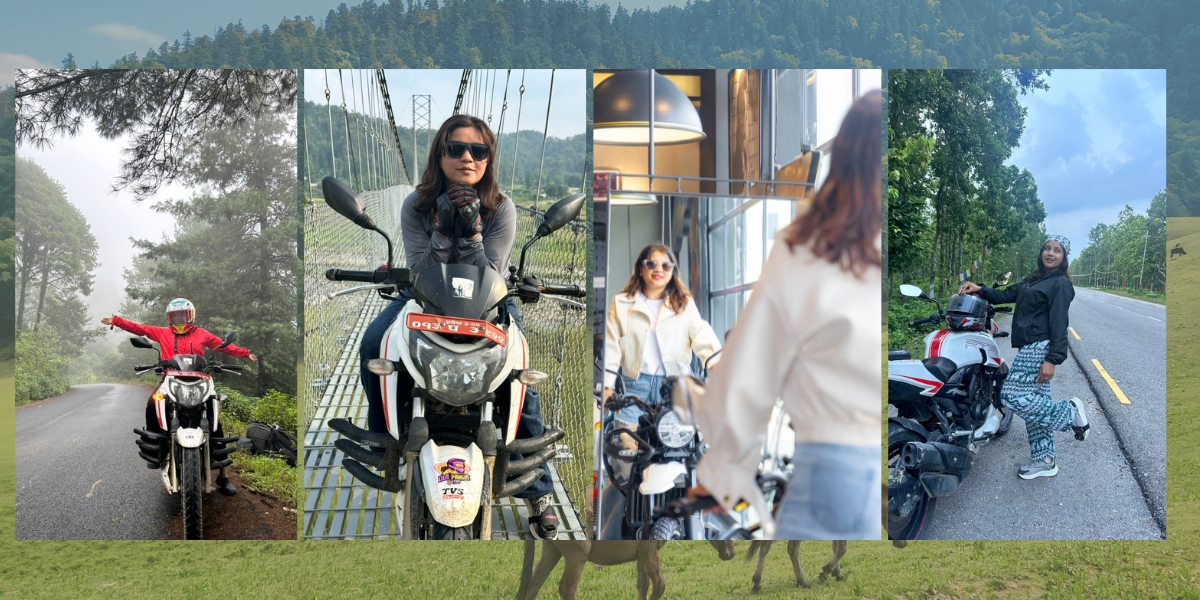
KATHMANDU: While walking on the trail toward Langtang, Pabina Khadka stood still for a moment. The fatigue of the entire day weighed on her soles, and she was catching her breath. Looking toward the mountain visible nearby, a word slipped from her mouth—”Wow.”
That very journey and moment around 2018 turned her life in a new direction. After that, her series of solo travels began. For the past two years, she has been active as a professional rider.
Born in Dolakha, Pabina calls herself a “Mountain Girl.” Besides this, she has other identities too: traveler, explorer, and now, a biker.
The story of Pabina’s travels begins during her college days. As an environmental science student, the college used to take them on educational tours to places like Pokhara, Itahari, and Chitwan. She says it was from there that the desire to travel sprouted within her.
The person who guided her into the real world of trekking, however, was her friend Susan. Susan, who was also a trekking guide, always encouraged Pabina and her friends by saying, “We can walk.” This habit, which initially started with short hikes to places like Sundarijal and Bethanchowk, reached all the way to Langtang thanks to Susan’s encouragement. “Seeing pictures of my friend visiting Gosaikunda made me envious,” Pabina recalls. “Later, when I reached there myself and looked around, the feeling was completely different. I felt that Nepal is an exceptionally beautiful country.”
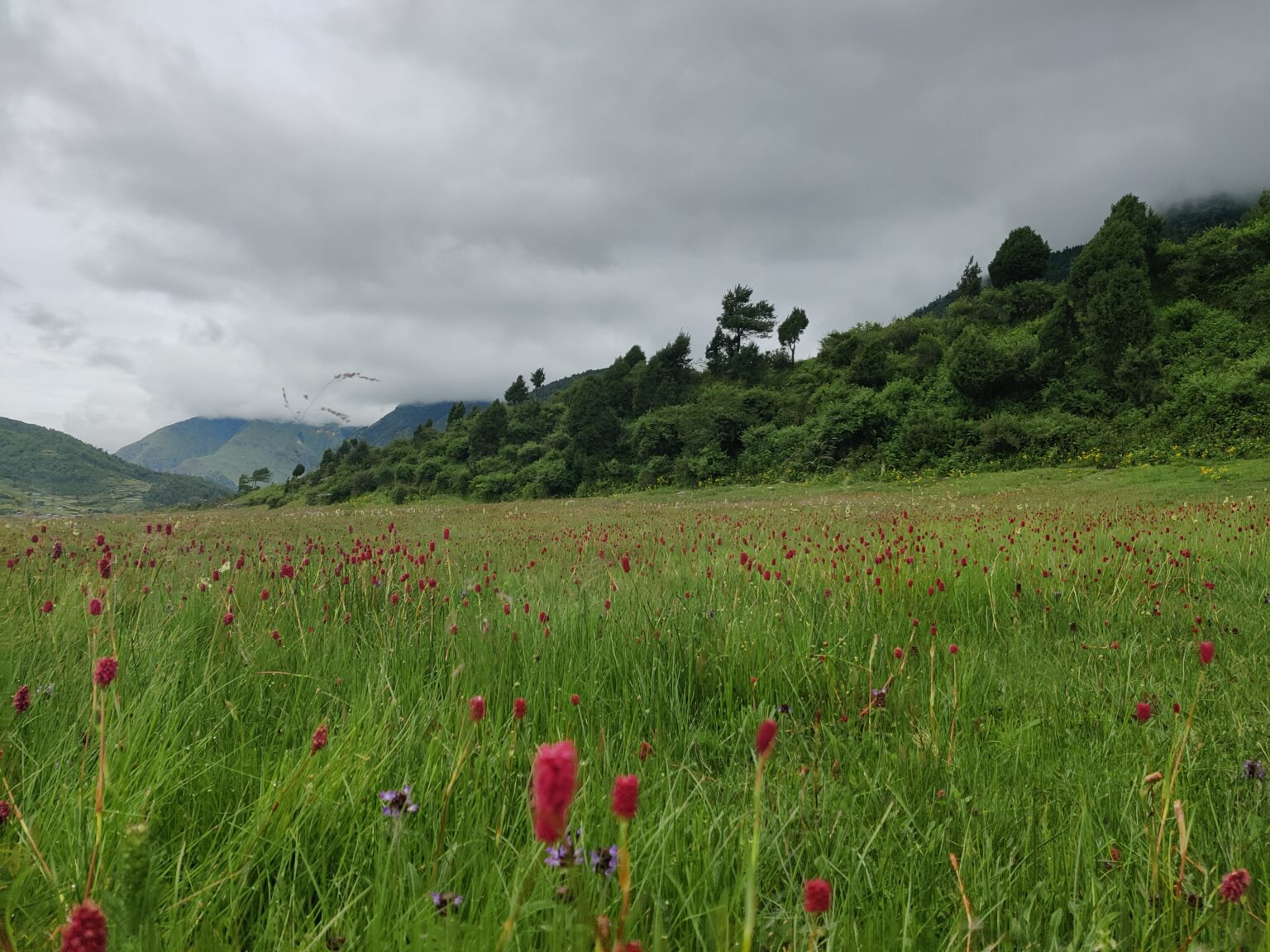
During that time, Pabina worked in the development sector, and that job also pushed her travels forward. Since she had to visit various districts, she developed a habit of exploring nearby places wherever she went. In this way, remote places in Karnali like Shey Phoksundo, Khaptad, and Rara were added to her travel list. Over time, Pabina has left her footprints in many corners of Nepal—from Manang, Mustang, Panchpokhari and Bhairavkunda in Sindhupalchok to Ama Yangri, from Langtang-Gosaikunda in Rasuwa to the North and South Base Camps of the Annapurna region, the Everest region and Gokyo Ri in Solukhumbu, all the way to Khumai Danda. This list has made her identity even more meaningful. Traveling is not just a hobby for her; it has become a lifestyle.
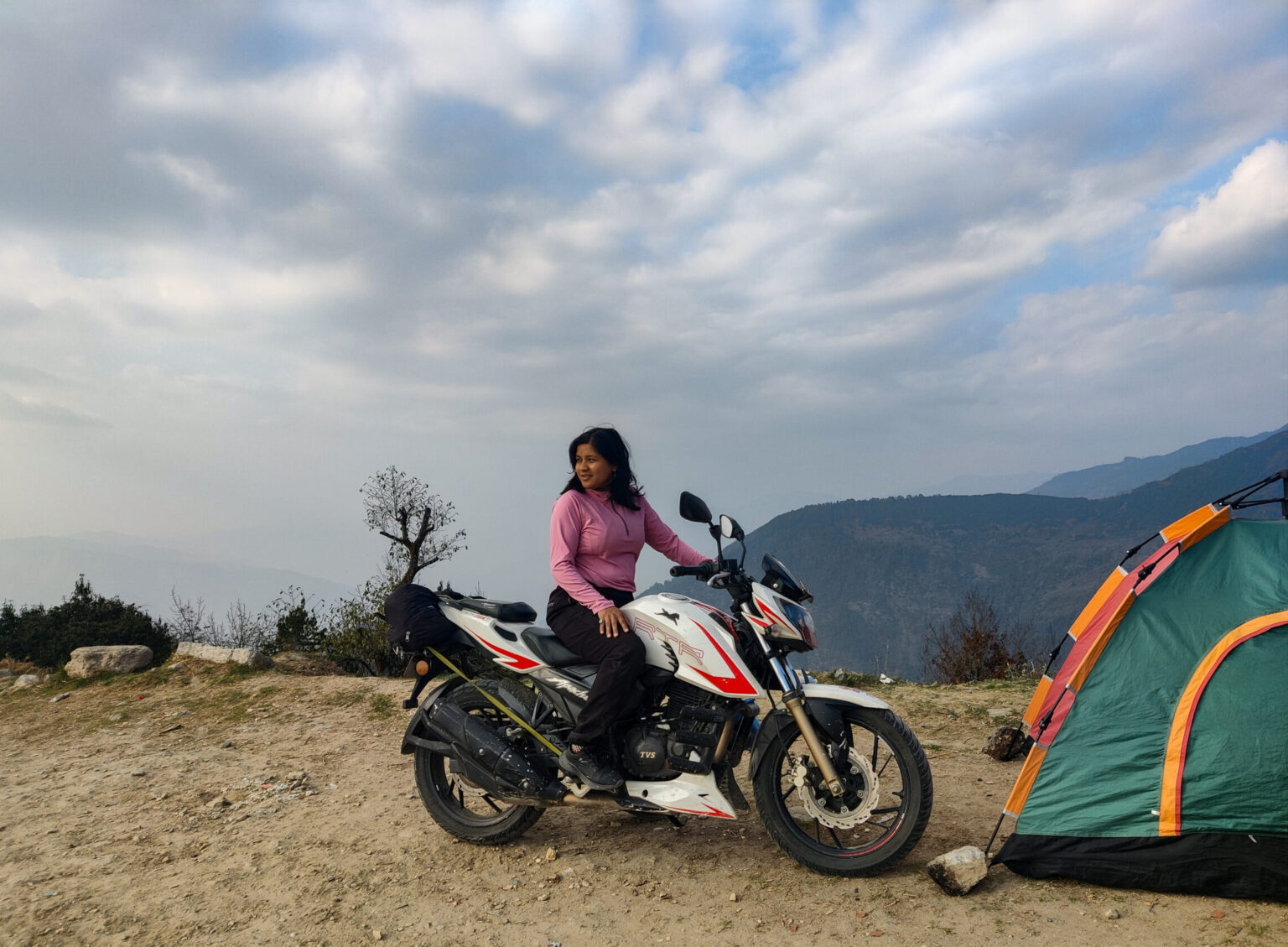
Pabina initially traveled with friends. She mentions that as her experience grew, her desire and confidence to walk alone gradually increased. “Walking with friends has a different joy of looking out for each other and chatting,” she says, “but walking alone gives you the freedom to move at your own pace. And that freedom became dear to me.” The frequent halting of plans due to friends’ conflicting schedules was another decisive reason that compelled her to walk alone. That compulsion later turned into a strength. If she felt like it, she just left. No need to weave endless plans, no need to wait for anyone.
When walking alone, you meet new people, hear their stories, and share your own. You get to understand the lifestyle and culture of the local community closely. “Even strangers become friends in a moment, and we can connect through social media,” she shares.
Knowing your limit is important, but it turns out you can go even beyond that limit.
However, solo travel was not an easy task for Pabina. Seeing a girl traveling alone, she has frequently heard questions like “Did you come alone?” and suggestions like “You should bring a friend along.” Her answer, though, always remained the same: “I enjoy walking alone. It gives me spiritual peace. I don’t walk to show anyone; I walk to know myself.”
In Nepali society, it is not easy for a daughter to head out alone for a trek somewhere far away. In the beginning, Pabina also used to leave without telling anyone at home or would inform them only after reaching the destination. Gradually, her family began to understand her passion for traveling. Even so, family members didn’t stop saying from time to time, “Daughter, stop traveling now.” At those times, she always gave a ready-made reply, “If I stop traveling, it will feel like I’ve stopped living life altogether. I cannot do that.”
If she doesn’t get to observe new paths, rivers, forests, hills, and mountains to interact sometimes with nature and sometimes with herself, she feels uneasy. That is why she repeatedly sets out on journeys.
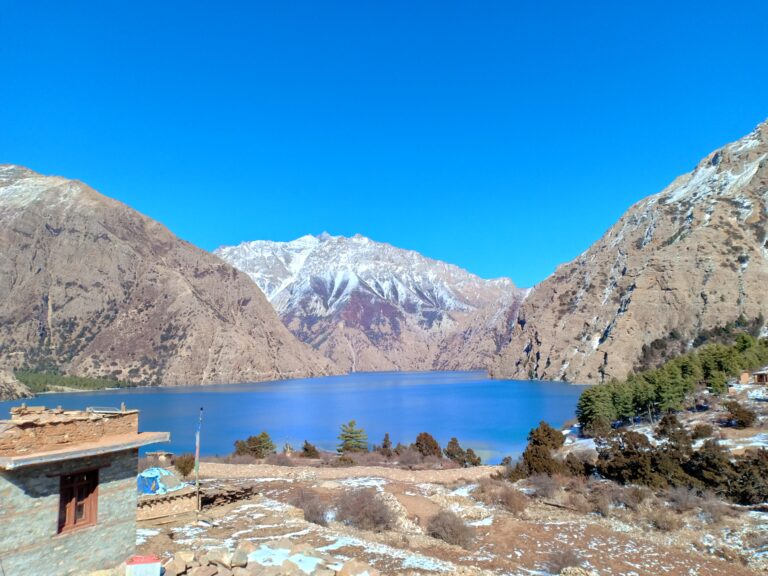
Although Pabina prioritizes traveling alone, the most special moment of her life came when she took her grandfather, grandmother, and parents on a trip to Mustang. “Our family makes many sacrifices for us, so being able to show them the places I traveled to gave me more satisfaction than at any other time,” she says emotionally. After reaching Mustang, her parents reportedly said, “No wonder our daughter keeps traveling, since a place like this exists.”
Pabina gets excited just by the talk of bikes. A bike is not just a companion to her, but also an achievement in life. “When I was little, I had never seen any girl riding a bike,” she says. Even so, the desire to learn and ride a bike had built a home in her mind. In our society, there is still no shortage of people who think “girls are supposed to ride scooters.” When Pabina goes out traveling on a bike, many people ask her, “You must have come on a scooter, right?” When she shows them her bike, people look at her with surprise and disbelief. Pabina, however, learned to ride a bike directly.
Last year, she set out toward Dhorpatan-Taksera on her bike. At that time, there was a little excitement and a little fear in her heart. Yet, she dared to do it. The company of other bikers met along the way and her own determination brought her to the destination. “Initially, there was a fear of what to do if the bike broke down on the way,” she shares. Managing things like how far one could reach and where to stay for the night was not just a challenge. There was also the joy of getting lost away from the crowd during a long journey. “Riding a bike on a long journey gives a unique sense of freedom, and it helps reduce stress,” she says.
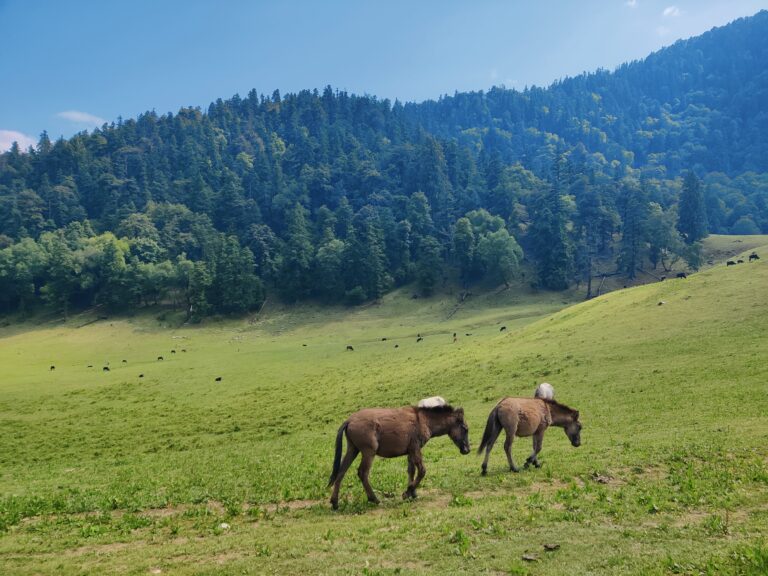
In the course of her journeys a few months ago, she set out to climb Paldor Peak with a group of 16 women organized by the Female Leadership Academy, where every responsibility from leader to guide and cook was held only by women.
“It was extremely difficult,” she recalls. “Having to carry your own luggage, and having to move forward even when it felt like you couldn’t walk at all.” That journey, which started around 3 AM from the High Camp at 5,200–5,300 meters, finally concluded upon reaching the summit at an altitude of 5,896 meters. “At that time, I realized how difficult it is on the mountains,” she says. “But from there, I also realized that one can go much further than what they think.” Later, while participating in a 15-day ice climbing training run by the Khumbu Climbing Center, she learned a simple yet profound lesson—knowing your limit is important, but it turns out you can go even beyond that limit.
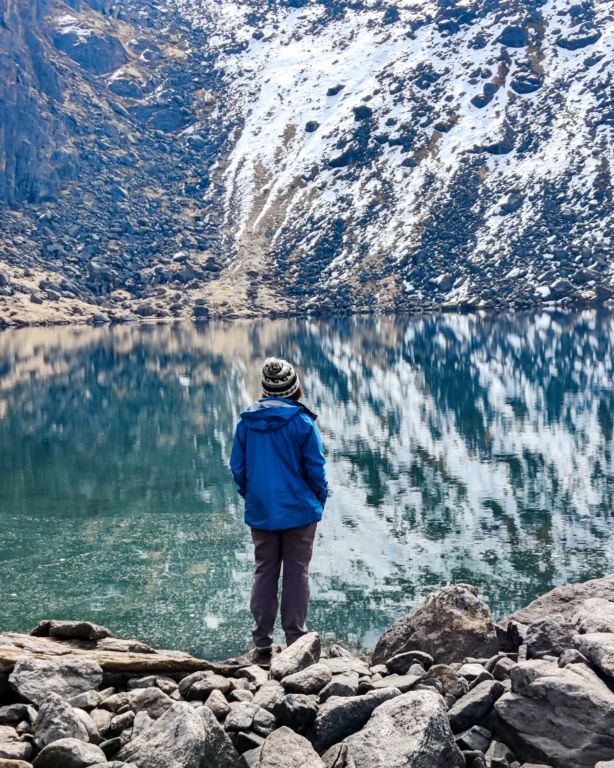
Pabina says that during that time, she got an opportunity to closely observe the struggle of trekking guides and porters who toil day and night during mountain expeditions. “Nobody understands their real struggle, waking up at 2 AM to cook food for guests and even carrying them when necessary. That sparked an immense respect for them in my heart,” she says.
For rider Pabina, traveling is not just about taking photos or making videos. Travel is a continuous process of learning. Travel has taught her to look at her life with a broader perspective.
Travel helps one blend into the environment, surroundings, and society. Since she works in the environmental sector, she also talks to people in rural areas about the impacts of climate change. Seeing the daily routine of people in different places closely makes her understand the value of the opportunities she has received even more deeply. Witnessing the struggling lives of young women her own age in Jumla made her realize how privileged she actually is. She says, “Travel itself teaches you how to look at yourself and how to be satisfied with your life.”
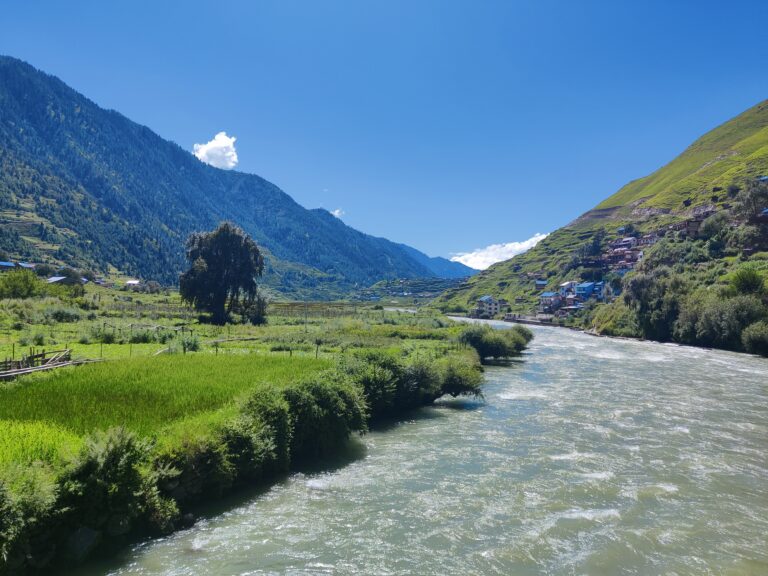
Who wouldn’t have a desire to travel! However, the question of money immediately comes up. How does Pabina manage her travel expenses then? She does not deny the experience of many who are unable to go out traveling due to a lack of money. But she considers passion to be bigger than money. “Money is needed to travel, that is true. But if there is passion, one can travel even by saving little by little,” she says.
She mentions that she sometimes sets out on journeys even by taking loans, and later pays off those loans by working. Her direct and short message to young men and women who love to travel just like her is simply, “Step outside.”
“If you just sit around thinking about what people will say, you will never move forward,” she says. “It might be difficult to go to an unfamiliar place alone, but walking alone even in familiar and safe places brings equal joy.” Experience has already proven to her that confidence does not come all at once; travel slowly builds it up.
She believes the defining feature of travel is that it teaches the traveler to overcome the challenges before setting out and the obstacles encountered while traveling. Her experience also shows that there is no comparison to the satisfaction and energy that travel provides after it is completed.
Pabina’s tips for new travelers
1. Priority to Health: If you have high blood pressure or other health issues, take precautions while traveling to high altitudes.
2. Focus on Diet: Carry dry fruits, roasted chickpea flour and energy-giving foods rather than junk food.
3. Altitude Sickness: If you experience altitude sickness, do not force yourself to go higher; descend, rest, and drink plenty of water.
4. Essential Medicines: Keep paracetamol, oral rehydration salts, bandages, and anti-vomiting medication with you.
5. Eco-Friendly: Carry a thermos instead of using plastic bottles. Manage the waste you generate yourself.