Kathmandu
Sunday, July 19, 2026





As the two neighboring Asian giants prosper, Mount Everest is no longer just a Western dream, but has transformed into a symbol of prestige and adventure for the rising Asian middle class.

KATHMANDU: When Ang Tsering Sherpa (73) of Khumjung, Solukhumbu, followed in his father’s footsteps and joined the mountaineering sector, Chinese climbers scaling Mount Everest from the Nepal side were rare. According to him, even from India, only institutional teams used to come for Everest expeditions. However, he says the situation has completely changed now. “Compared to the past, the overall number of climbers has increased. Within that, the number of Indian and Chinese climbers has grown remarkably,” he says.
Through Asian Trekking, a company owned by tourism entrepreneur Sherpa, 15 Chinese and 12 Indian climbers are scaling Mount Everest in the spring season of 2026. His company was established in 1982.
Medhavi Gulati, who has studied mountains and the Sherpa community, states that the economic development achieved by countries like India and China is reflecting in mountaineering. “A major reason for this is the growth in the number of the upper-middle class and their disposable income along with economic development,” she says. “People’s capability to spend on expensive mountaineering expeditions has increased.”
As India and China grow richer, Mount Everest is no longer just a Western dream; it is increasingly becoming a symbol of prestige and adventure for the Asian middle class as well. Their strong presence has altered the balance of power and the market within Nepal’s tourism industry. Mount Everest climbing, which used to rely on climbers from Western nations, has begun shifting toward China and India.
After the 1990s, as Nepal gradually opened up the mountaineering sector to the private sector, the climbing business expanded rapidly. It was after the period Nepal opened up that the economies of both India and China, the world’s most populous countries, expanded rapidly. China’s economy, which stood at USD 1.2 trillion in 2002, has now grown to USD 18 trillion. Similarly, India’s economy has also reached USD 4 trillion from USD 470 billion. Along with the economic growth of India and China, the number of climbers from these countries scaling Mount Everest appears to be rising.

When Mingma Sherpa started his work by establishing the mountaineering company Seven Summit Treks in 2009, there were people from India and China inquiring about Everest climbing with interest. At that time, his company used to sell packages to foreign climbers at USD 25,000 to USD 28,000 per person. “When we started the climbing company, there were many inquiries from India and China regarding the cost of climbing. But after we stated the cost required to climb the mountain, they would not contact us further,” he says.
The company was established together by four brothers, including Mingma, who is the first Nepali to climb all 14 peaks in the world above 8,000 meters. According to him, initially, a package of INR 1.2 million was proposed to Indian climbers for climbing Mount Everest. Currently, the same package costs INR 4 million. From his company this time, 30 climbers each from India and China are scaling Mount Everest.
The mountain known to the world as Everest and to Nepalis as Sagarmatha is called ‘Chomolungma’ by the Chinese. For the first time on May 25, 1960, Chinese citizens Gonpu and Qu Yinhua reached the summit from the Tibetan side. Situated on the border of Nepal and China, Mount Everest has been climbed 1,053 times by Chinese mountaineers until 2025. Out of this, climbs from the Nepal side account for only 35 percent.
The Chinese started climbing Mount Everest from the Nepal side quite late. From the Nepali side, Chinese citizen John Tsang Chi-sing climbed for the first time on May 25, 2009. According to the Himalayan Database, which maintains data related to mountains, Chinese nationals have successfully summited Everest 746 times in the 15 years since 2011. Out of these, they climbed Mount Everest from the Nepal side only 370 times.
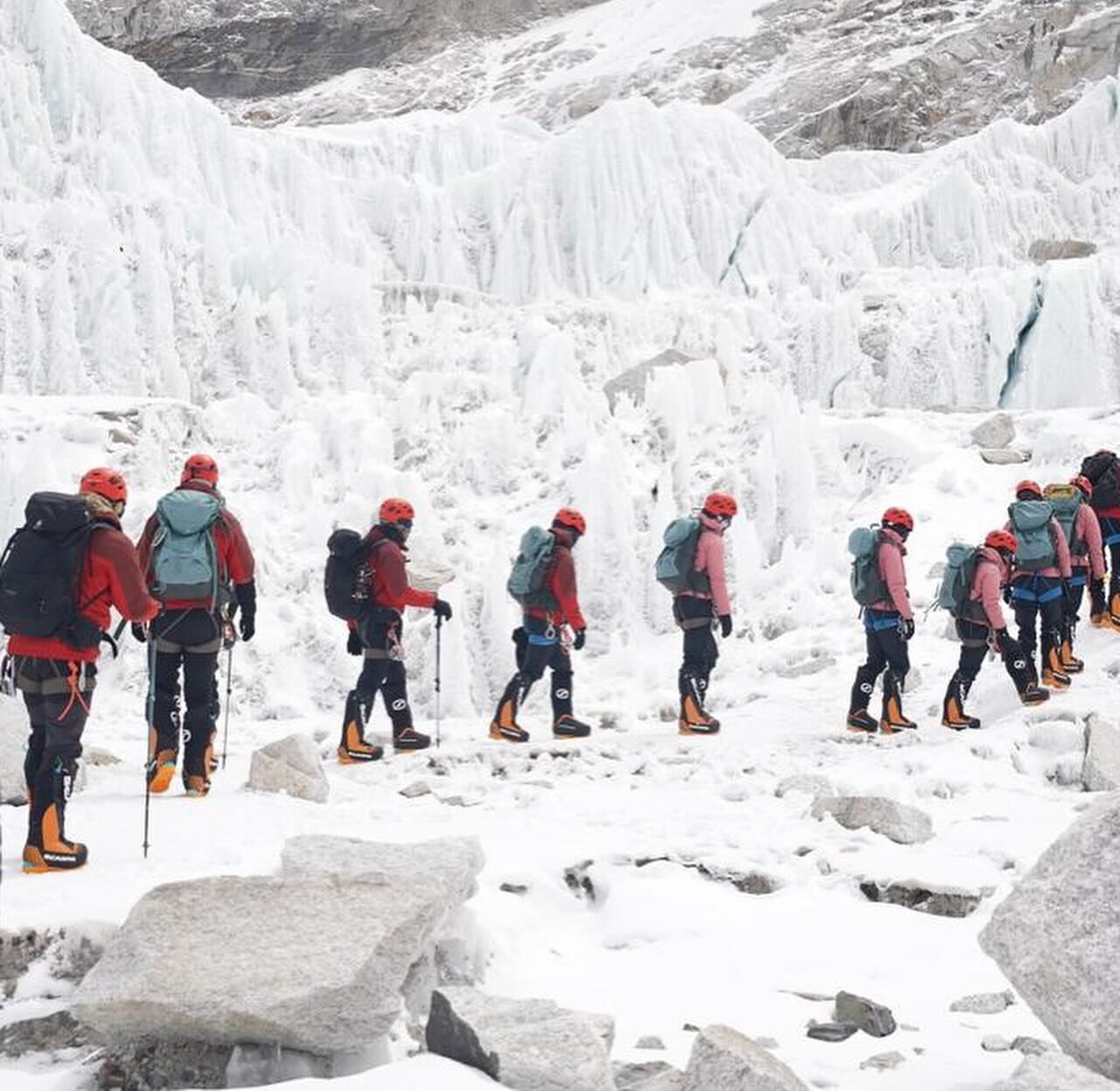
In the book Everest, Inc. about the commercial climbing of Everest by American writer/journalist Will Cockrell, the growing attraction of Indian and Chinese mountaineers is compared with the economic prosperity of both countries. The book states, “For the emerging upper-middle class people of these countries (India and China), the journey to Mount Everest has become an exciting status symbol.”
Despite being geographically located on the border of China and Nepal, India and Indians have been connected to Mount Everest since the beginning of its identification. In 1963, Indian citizen Nawang Gombu Sherpa climbed Mount Everest. By 1993, meaning until Mount Everest was formally opened for climbing, Indian citizens had climbed Mount Everest 21 times. To date, Indian climbers have scaled Mount Everest 551 times from the Nepal side. Out of this, 82 percent of the climbs (454 times) took place in the 15 years since 2011.
The peak of prestige
Climbing mountains higher than 8,000 meters is considered challenging. Difficult geographical terrain, lack of oxygen, and weather that changes every moment do not just make the climb difficult, but accidents can also result in death. The area above 8,000 meters is called the ‘Death Zone’. Due to low oxygen, human organs stop functioning. However, despite the risks, the highest peak continues to attract climbers. Mountaineer and psychologist Heather Keith Macdonald has stated, “Globally, one definition of heroism is returning alive from a situation where survival seems impossible. People believe that climbing Everest can remove the weaknesses or insecurities within them.”
Climbing Mount Everest, the world’s highest peak, is considered a matter of great prestige. Those who make successful climbs become celebrities. In Everest, Inc., anthropologist Pasang Yangjee Sherpa says, “When a Western client (climber) returns home after summiting Everest, they gain social validation. It also becomes a matter of pride and showing off. Some climbers even become brand ambassadors.”
This applies to Indian and Chinese mountaineers as well. Researcher Gulati states that people go climbing for fame and prestige. “Successful climbing of Mount Everest is viewed as an important means to earn name, fame, and social status,” Gulati says. “It also benefits professional careers. A successful climb helps in getting promotions in India or securing government jobs under the sports quota. This has become a path to advance careers for many Indian climbers.”
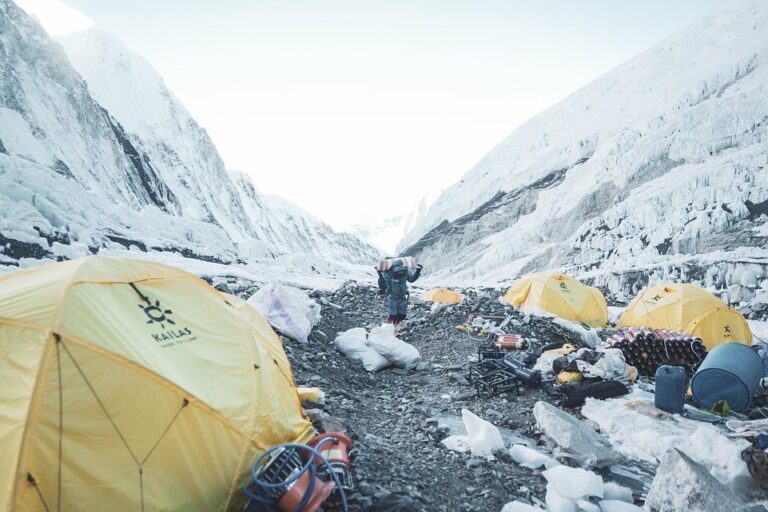
According to Gulati, previously, Indian mountaineers were mainly from the army. They took mountaineering as a matter of courage and discipline. She states that nowadays, the number of people outside the military background who are interested in commercial climbing has increased.
Among Indians climbing Mount Everest, names like H.P.S. Ahluwalia, Kiran Inder Kumar, Narendra ‘Bull’ Kumar, Prem Chand, Rita Gombu Marwah, Bachendri Pal, Santosh Yadav, Mohan Singh Kohli, and Ashok Abbe, among others, are considered proud names. “Most of them belong to the Indian Army, who climbed not just Everest, but difficult mountains like Nanda Devi and Changabang, which are considered tough for climbing and require special skills,” Gulati says. “They viewed climbing as a serious subject. Their place has now been taken by new climbers.”
Recently, climbers like Arjun Vajpai and Baljeet Kaur have made Everest popular in India. Having climbed Mount Everest and Mount Annapurna, they have set a goal to climb all 14 peaks in the world above 8,000 meters. “There has been a huge increase in Everest climbing,” Gulati says, “but that kind of interest is not found in other mountains.”
Many climbers of the new generation are climbing Everest with full commercial support. In this, climbing companies like Seven Summit have been providing assistance. Mingma from this company states that previously, Indians lacked self-confidence in climbing mountains, and they made efforts to remove that. “In the initial days, people doubted whether Indians could climb mountains. Because we encouraged them to climb mountains and we put in special hard work, their attraction toward this field gradually increased,” he says.
Mingma’s understanding is that one reason for the increasing attraction of mountaineering among Indians is family and social competition. He says, “When one member of a family, like a cousin (paternal uncle’s or aunt’s son or daughter), climbs Everest, then a feeling arises in another member asking why shouldn’t I go since they climbed it. Because of this, the number of climbers kept adding one after another.”
Similarly, another factor behind going for Everest expeditions by taking risks is the hunger to make records. Due to this, the highest peak keeps calling them to play with risk and challenges.
Record-breaking permits
Even though the war in West Asia and global uncertainty affected Nepal’s tourism sector, Mount Everest climbing was not impacted. Rather, records were set this year in all three areas: the number of permits, climbing teams, and royalty collection. Indian and Chinese climbers have a huge contribution to this.
According to the Department of Tourism, among the 492 climbers who took permits to climb Mount Everest until May 15, one-third are from China and India. There are 109 Chinese and 61 Indians.
To climb Mount Everest, foreign climbers have to pay USD 15,000 as royalty and Nepalis have to pay Rs 150,000. Mountain guides who operate the climbs, however, do not have to pay royalty. This year, the Government of Nepal has collected Rs 1.0786 billion in royalty from 51 groups representing 55 countries that received permits for Everest expeditions. “Due to various crises, we thought the number of climbers from Western countries might decrease. But that did not happen,” says Ang Tsering.
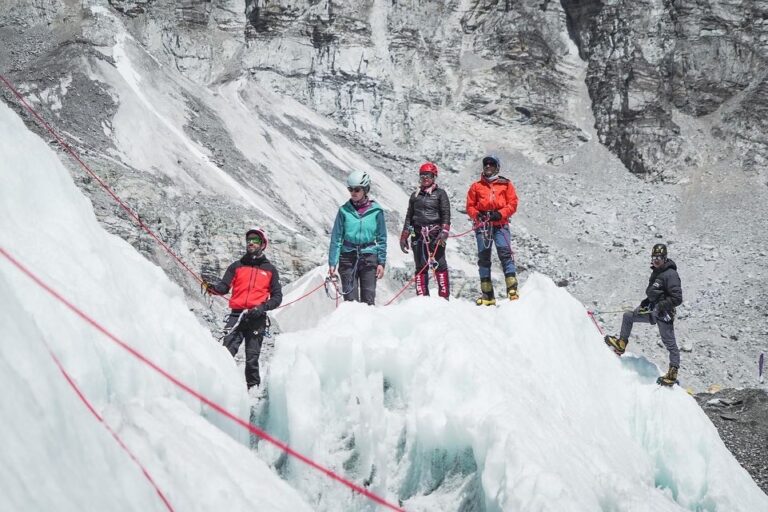
If the number of Nepali climbers on Everest is excluded, foreign citizens have climbed Mount Everest 4,246 times from the Nepal side since May 29, 1953. The largest number of people climbing this way occurred in the last 15 years. Out of the 9,890 times climbs were made from the Nepal side, 6,790 times (around 69 percent) took place in the last 15 years. Climbers from both India and China have a big hand in this.
In the last 15 years, Chinese climbers have made 370 climbs from the Nepal side. Climbing companies state that climbing Mount Everest from the Tibet side used to be 35 percent cheaper than from Nepal. The Government of Nepal increased the climbing royalty this very year; now, the cost to climb Mount Everest has reached USD 15,000, up from USD 11,000.
According to Ang Tsering, due to the organized system of fixing ropes up to the summit and because the Chinese government closes climbing from time to time, many climbers have been attracted to the Nepal side. The reason is that climbing has run uninterrupted every season from Nepal. During the 2008 Beijing Olympics, China closed Mount Everest climbing from the north side. The climbing on the Tibet side had come to a standstill during the Covid pandemic as well.