Kathmandu
Saturday, June 6, 2026





It challenges the foundations of belief, asking if the rules around religion, love, marriage, caste, gender, and women’s freedom are right at all
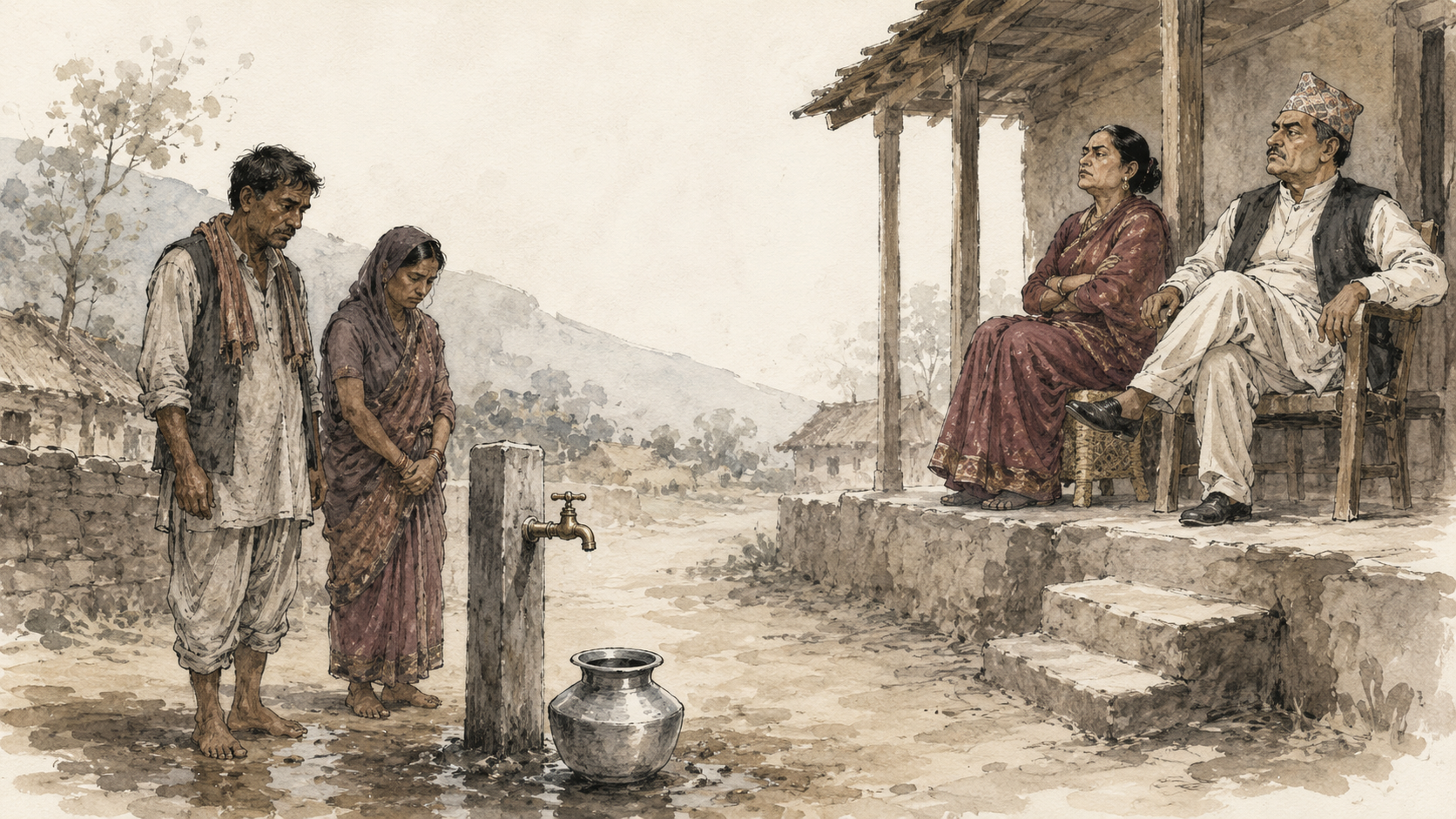
KATHMANDU: On one side lie the chains of tradition; on the other, the wings of freedom. One is governed by the fear of society, the other by a steadfast commitment to truth. In a world repeatedly caught in such dilemmas, the works of Sarat Chandra Chattopadhyay continue to return with unsettling relevance. His final novel, Shesh Prashna, stands as one of the clearest expressions of that enduring tension.
A writer shaped by Bengali society yet expansive in his concerns, Chattopadhyay is known for creating women who refuse to remain confined within silence. His fiction navigates human relationships with unusual sensitivity while probing caste, class, and emotional complexity. That reach has carried works like Devdas, Parineeta, Choritrohin, and Srikanta across languages and generations, with their cinematic adaptations such as Devdas, Parineeta, Majhli Didi, Apne Paraye, and Swami further cementing their place in cultural memory.
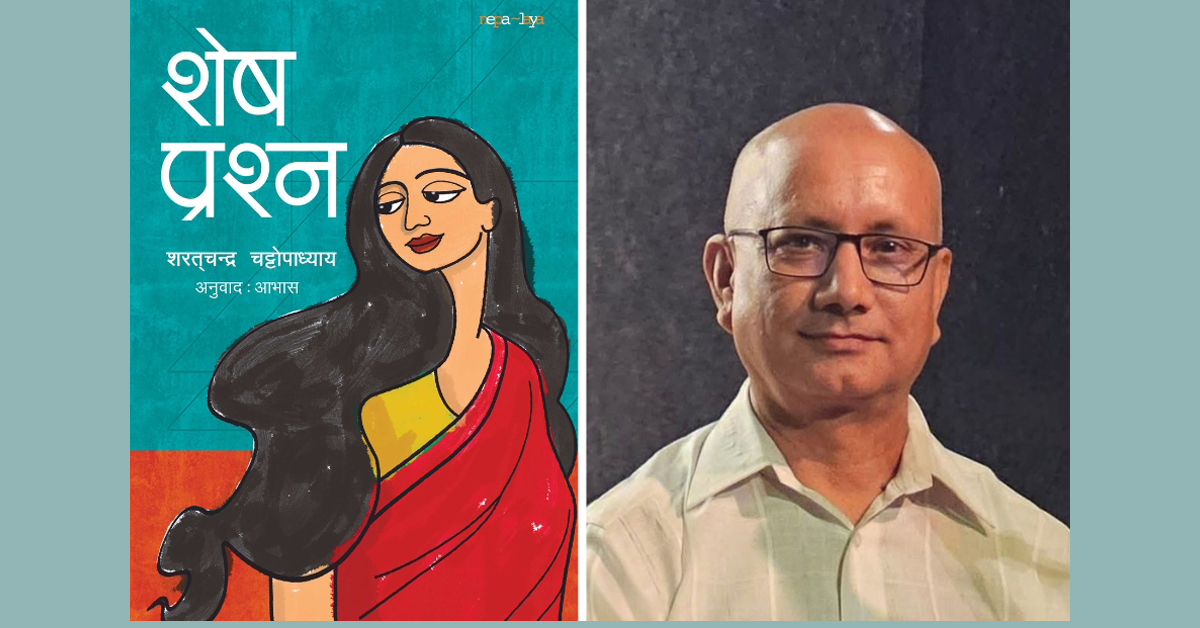
Published after his death, Shesh Prashna arrives in Nepali through poet Aabhas, a translator deeply attuned to Bengali cultural rhythms. The novel opens in Agra, where an aging Bengali gentleman, Ashu Babu, relocates with his educated and poised daughter, Manorama. What begins as a quiet domestic shift gradually unfolds into a layered exploration of belonging and moral conflict.
The narrative breathes through its setting. The bungalow, its decor, and its structure reflect Ashu Babu’s effort to situate himself within a new social world. This carefully balanced environment, however, is disrupted with the arrival of Shivanath and Kamal, whose presence alters the emotional direction of the story.
Shivanath, indulgent and morally unstable, brings Kamal into his life as a second wife, abandoning his ailing first partner. Kamal, from a marginalized caste and denied formal education, carries a grace that defies conventional standards. Her presence unsettles not only the household but the assumptions that govern it.
The narrative breathes through its setting. The bungalow, its decor, and its structure reflect Ashu Babu’s effort to situate himself within a new social world.
The emotional fractures deepen when Manorama, in a turn that surprises both the reader and Ajit, a suitor newly arrived from Britain, finds herself drawn to Shivanath. At the same time, Kamal is left behind, her reliance on him exposed as fragile.
It is here that the novel shifts its center. Through Kamal’s journey, Shesh Prashna moves beyond social observation into moral inquiry. Her resilience, her ability to rise from emotional rupture, and her quiet defiance begin to redefine the narrative itself.
Central to this transformation is her crossing of the Laxman Rekha. Traditionally understood as a protective boundary drawn by Lakshman to safeguard Sita from harm, the term has evolved into a powerful metaphor across the Indian subcontinent. It signifies the invisible yet rigid limits imposed by social tradition, particularly upon women. To cross it is to risk judgment, exclusion, and moral condemnation. Yet Kamal’s act of crossing is neither dramatic nor reckless. It is measured, composed, and deeply intentional. By stepping beyond this socially sanctioned boundary, she does not simply rebel. She exposes the narrowness of the system itself, sending quiet tremors through the structure of contemporary society.
The novel’s structure reinforces this unfolding. Divided into 29 sections, it introduces its central force only in the fifth part. When Kamal emerges, she does so with a voice that is both sharp and precise. Her words often carry an uncomfortable honesty. The idea that truth is bitter finds its fullest expression in her. Like karela, she may appear harsh at first yet proves necessary and ultimately beneficial.

An image of Sarat Chandra Chattopadhyay, who is the original author of ‘Shesh Prashna’
What is striking is how subtly the reader’s perception shifts. Initial resistance gives way to acceptance almost unnoticed. Kamal, outwardly ordinary, reveals an extraordinary interior life. She is articulate, rebellious, progressive, and deeply self-respecting, yet never devoid of warmth.
As the narrative progresses, a quiet realization begins to take hold. The reader starts to question not the character but themselves. Why could we not become like Kamal? It is in this moment that the novel deepens its hold, drawing the reader inward.
The flow of the narrative remains effortless. Even in translation, Aabhas preserves a language that is simple yet lyrical. The Bengali environment, its customs, and its musical undercurrent give the book the texture of classic Bengali cinema, unfolding vividly in the reader’s imagination.
Beneath this aesthetic ease lies a dense thematic landscape. The novel moves across traditional Indian society, the insulated urban elite, caste hierarchies, gender inequality, and the enduring search for freedom. Philosophical dialogues shape the narrative, turning it into a space of reflection.
Each character carries significance, and their dialogues often linger beyond the page.
The flow of the narrative remains effortless. Even in translation, Aabhas preserves a language that is simple yet lyrical. The Bengali environment, its customs, and its musical undercurrent give the book the texture of classic Bengali cinema, unfolding vividly in the reader’s imagination.
Defending his actions, Shivanath says, “Why should I continue to suffer without any crime? I do not believe it is just to place one person’s suffering onto another.” His words reveal the moral evasion beneath his choices.
In contrast, Ashutosh Babu, speaking to Kamal, reflects, “What can love not do? Beauty, youth, wealth, respect, these are nothing. Forgiveness is the true soul of love. Where there is no forgiveness, love becomes an irony.” His voice expands the philosophical depth of the novel.
Nilima, bound by conservative thinking, confesses with quiet intensity, “After being born a woman in this country, if one begins to live by blaming fate, one reaches nowhere.” Her words carry the weight of lived reality.
Haren, grounded in tradition, adds another layer, “People fail to understand that the suffering that follows the violation of social norms can only be endured through strength of character and intellect.” His perspective reveals the cost of defiance.
Such dialogues echo throughout Shesh Prashna, articulating questions of women’s freedom, selfhood, love, and the deeper emotional truths of life.
Published in 1931, the novel remains strikingly relevant nearly 100 years later. The dominance of narrow perspectives, embodied by characters like Nilima, Manorama, and Shivanath, persists.
At its core, the novel carries a strong feminist perspective, yet it reaches beyond labels. It insists that one must first become human before assuming the roles of woman or man. At the same time, it exposes how entrenched conservative thinking continues to imprison individuals.
Published in 1931, the novel remains strikingly relevant nearly 100 years later. The dominance of narrow perspectives, embodied by characters like Nilima, Manorama, and Shivanath, persists. The Kamals, those who dare to think and live differently, remain rare, their wings not fully spread.
The novel ultimately turns toward the reader. It suggests that life becomes lighter when one knows oneself, accepts truth, and begins to love without fear. Yet we continue to waste our lives worrying about what others think. We hesitate to say no. We confine ourselves within a comfort zone, afraid to cross the lines drawn by society.
Kamal stands in complete opposition to this. She accepts her reality, strengthens her inner resolve, and moves forward with self-respect. It is difficult, but not impossible.
She does not attempt to change society first. She changes herself. That transformation, in turn, alters the perceptions of others. Even Ashu Babu, who once viewed her with hesitation, comes to accept her as his daughter.
In the end, Shesh Prashna becomes more than a novel. It becomes an invitation. It urges those who carry a hidden Kamal within them to find the courage to bring her forward. It calls for introspection before judgment.
And then it leaves us with its most persistent inquiry. Are the rules surrounding religion, love, marriage, freedom, caste, and gender truly just?
Shesh Prashna does not answer. It asks, again and again. And in doing so, it transforms itself into a philosophical journey through human thought, one that refuses to end with the final page.