Kathmandu
Wednesday, July 1, 2026





While the government sees a sovereign AI compute center as a catalyst for economic transformation, experts question whether Nepal has the laws, infrastructure and safeguards needed to support it.
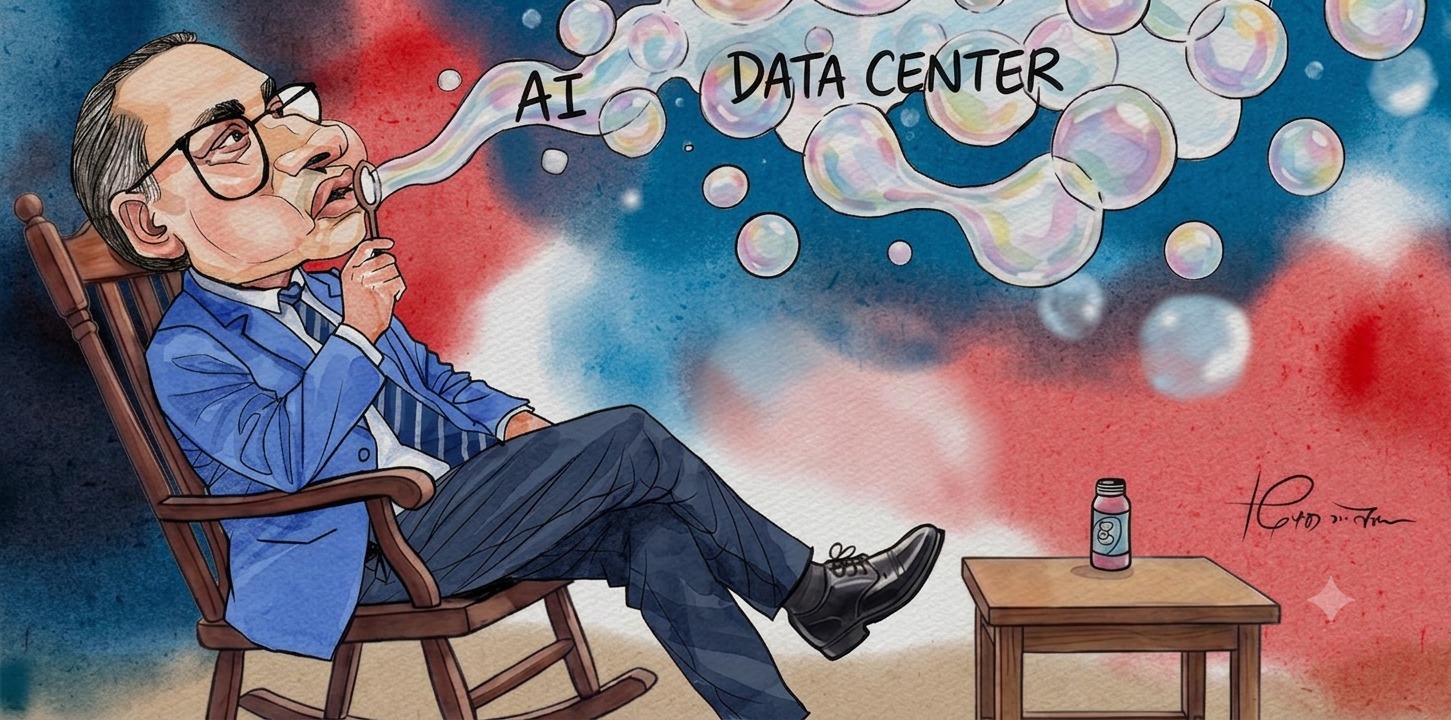
Following the government’s announcement to establish the country’s first AI data center, interest and debate regarding the matter have intensified. The budget for the fiscal year 2026/27, presented by Finance Minister Swarnim Wagle on May 29, outlines the establishment of a “Sovereign AI Compute Center” in Syuchatar, Kathmandu. The budget announcement states that the compute center will utilize clean hydropower to operate thousands of AI processing units, providing high-tier computing facilities to domestic startups and entrepreneurs at subsidized rates. Finance Minister Wagle expressed confidence that this will lay the foundation for an AI-based economic transformation.
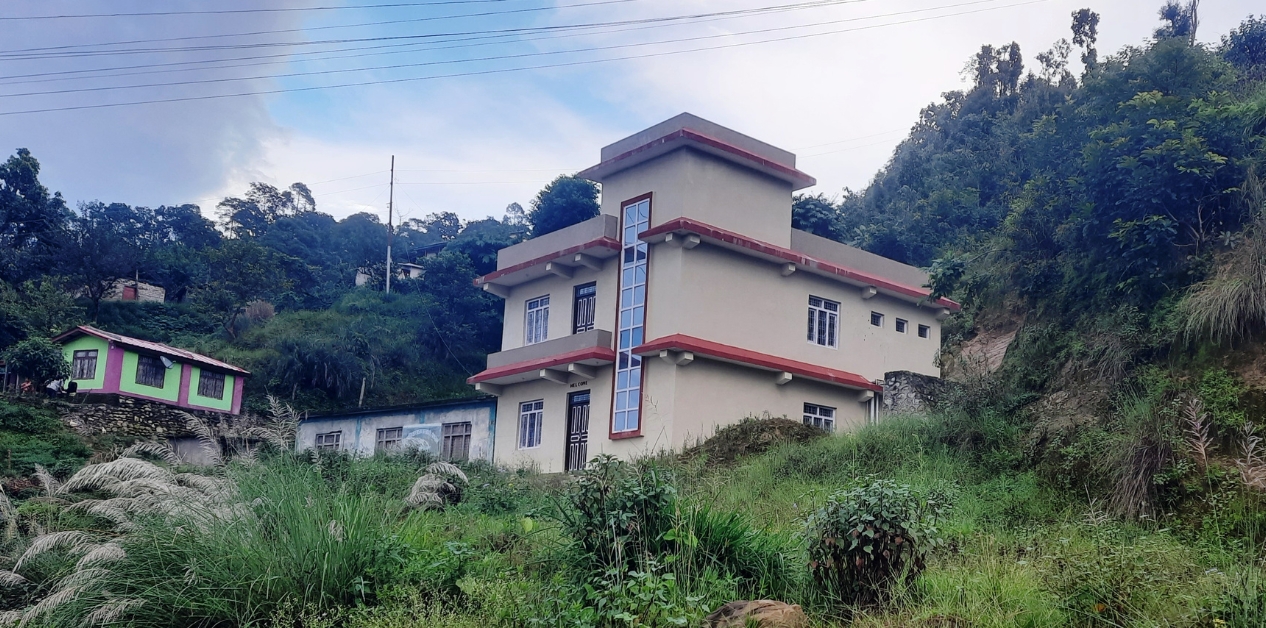
Syuchatar, where the data center is proposed to be built, is located approximately 6 kilometers west of New Road, Kathmandu’s primary commercial hub. This area spans Wards 7, 9, and 10 of the Nagarjun Municipality. The government has not disclosed the specific location within Syuchatar where the compute center is to be established.
As the subject of the AI data center has been directly incorporated into the budget, a debate is unfolding in the country regarding the necessity, feasibility, national security related to data, and the social and environmental impacts of data centers. In particular, critics point out that this ambitious project was announced without prior studies regarding the massive investment required to build it, the quality and uninterrupted power required for its operation, the large volumes of water needed, and the burden of pollution the local population will have to bear. The government, led by the Rastriya Swatantra Party (RSP)—which prioritized physical and technical infrastructure development for building a digital economy in the budget—has drawn interest over its exact motives for establishing the data center, how economically viable it is, and its associated risks.
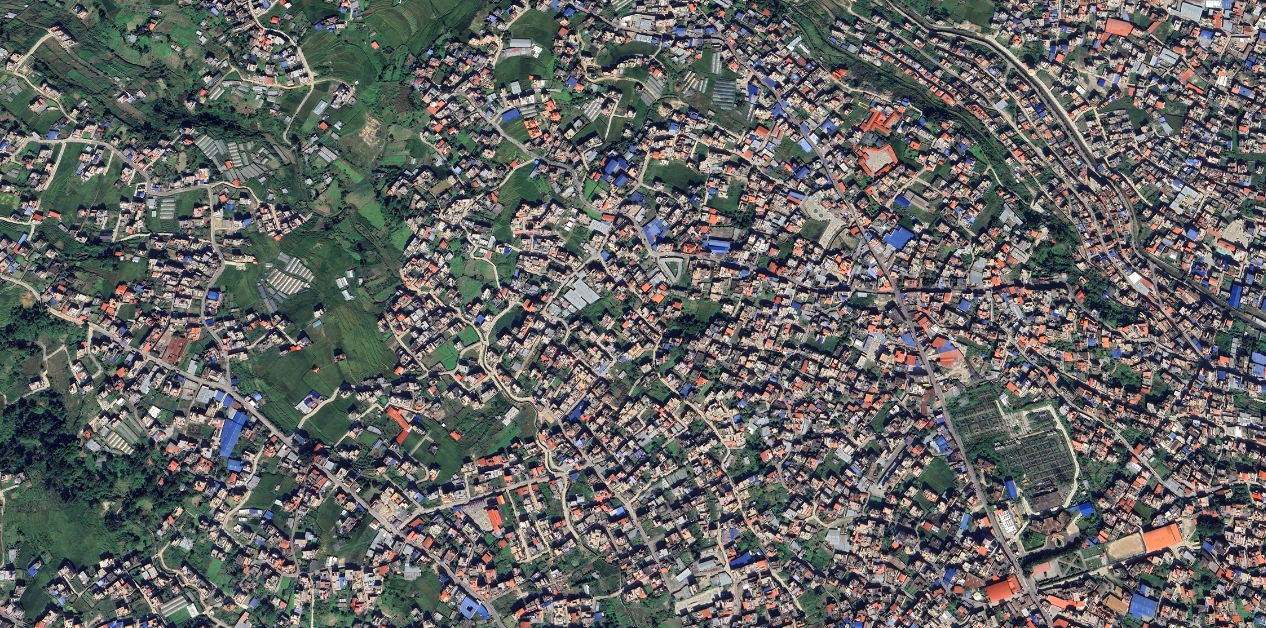
Syuchatar Area
In the commitment paper brought forward by the RSP for last year’s parliamentary elections, the issue of data centers was integrated across various dimensions of the digital economy. The commitment paper mentioned prioritizing investments in communication infrastructure, public digital infrastructure, data centers, cloud services, and high-speed connectivity to build a digital ecosystem, with the goal of creating state-of-the-art digital parks in all seven provinces to turn Nepal into a global tech hub. After winning the election and forming the government, the RSP’s plan to establish a data center, as outlined in its commitment paper, has been integrated into the budget.
Recently, foreign companies have also shown interest in establishing AI data centers in Nepal. According to Sunita Nepal, Joint Secretary and Spokesperson for the Investment Board Nepal, foreign investors have enquired about building and operating data centers in Nepal. “No one has come forward with a formal proposal yet, but they come to understand the process,” she says. However, foreign investors cannot directly establish data centers in Nepal. According to the Public-Private Partnership and Investment Act, 2019, foreign investments in Nepal require collaboration with government entities and the private sector. “When foreign investors operate a data center, there are obligations such as handing it over to the government after a certain period; we brief them on all these procedures,” says Nepal.

RSP leaders releasing their commitment paper. File Photo
Nepali companies are also taking the lead in establishing data centers. Recently, a Nepali company named Bizuten Data Vault Pvt. Ltd. announced plans to establish a data center capable of handling AI workloads. According to a press release issued by the company on May 7, 2026, this project will feature 100% domestic investment, while its technical and policy partners will include companies like India’s VVDN Technologies, Google Cloud, AMD, and Micron. It is stated that a 240 kW capacity data center will be established in Chobhar, Kathmandu, and Birgunj with an investment of NPR 2.5 billion. Stating that the demand for data centers in Nepal is high, the company aims to expand capacity elsewhere to reach 5 MW by 2030.
Status of data centers
According to the Data Center and Cloud Service (Operation and Management) Directives, 2024, a “data center” is defined as a center equipped with the necessary infrastructure to store data and operate information technology systems for the government, public, and private sectors. Similarly, “data” is defined as information, knowledge, concepts, or instructions prepared or being prepared in a formalized manner in characters, numbers, images, sounds, or audio-visual forms, or produced by a computer, computer system, or computer network for use in a computer, computer system, or computer network.
Nepal houses both government and private sector data centers to store data and run IT systems. The Integrated Data Management Center (National Information Technology Center) located inside Singha Durbar is the government’s primary digital repository for public services and citizens’ records. Constructed in 2009 with a grant from the Korean government, this center hosts online services including websites, data, emails, and the Nagarik App for various ministries, departments, and all 753 local levels. To date, 10,278 government domains have been registered and managed in this center. Through the government cloud, servers, storage, and networks have been provided to 359 government entities to run their IT systems, under which 927 virtual machines are currently operational.
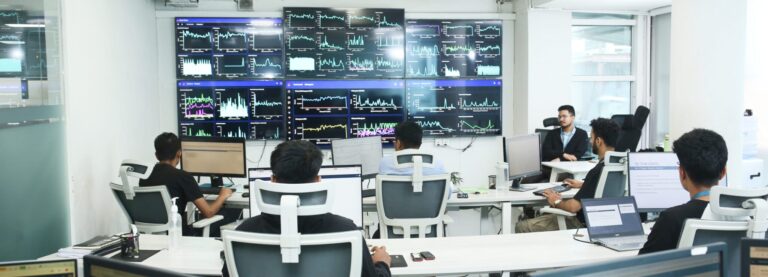
Bhairav Tech company based in Kathmandu. Photo: Company’s website
In addition, Nepal Telecom’s data centers are operational in Jawalakhel and Bhairahawa. Similarly, the Nepal Electricity Authority has a data center in Syuchatar. Furthermore, banks, financial institutions, and universities are also operating their own data centers.
According to the directives, private sector data centers and cloud service providers must be listed with the Department of Information Technology before providing services. Data centers that were operational prior to the introduction of the directives must also register mandatorily. According to Prakash Dawadi, Information Technology Officer and Information Officer at the Department of Information Technology under the Office of the Prime Minister and Council of Ministers, there are five private sector data centers currently operating after being listed under the directives. Ncell was the first company to register under the directives. Other listed companies include Access World Tech, Silver Lining, Data Hub, and DishHome.
“We have always called our country ‘landlocked’; if we transform it into a ‘land-linked’ nation, we can expand IT opportunities,” he says. “If that happens, employment will be created within the country for the nation’s IT workforce.”
As mentioned in the proactive disclosure for the third quarter (January–April 2026) of FY 2025/26 published by the department in April/May 2026, four data centers—excluding Silver Lining—also provide cloud services.
According to Department Information Officer Dawadi, data centers of several companies, including WorldLink, are operating without listing. WorldLink is operating a 3.5 MW capacity data center in Matatirtha, Kathmandu. To register, a data center must complete procedures for 13 types of documents, including a building completion certificate, details of human resources involved in operating the data center, and fire safety compliance. “Those who fulfill the process get listed; that is just a listing, not a license,” he says. “Once they register their business at the Office of the Company Registrar, they receive permission to operate a data center.”
Currently, the total capacity of operational and under-construction data centers reaches around 15 to 20 MW.
The need for robust data centers
The currently available data centers are insufficient to store and secure all types of data in Nepal. With the rapid development and accessibility of technology, establishing and operating sophisticated data centers under domestic ownership has become mandatory.
According to Information and Communications Technology (ICT) and cybersecurity expert Rajiv Subba, a robust domestic data center has become essential to prevent sensitive data—such as citizens’ personal details, national identity cards, and driving licenses—from leaving the country and to keep them secure within the nation. Subba, a former DIG of the Nepal Police, says, “The government’s talk of canceling contracts with foreign companies to print driving licenses and national identity cards is welcome. Because when our data is with foreign companies, sovereignty weakens, and there is a risk of misuse.” In this regard, he notes that Nepal must establish and operate its own strong and sustainable data centers.
AI developer and data scientist Kshitiz Rimal also notes that establishing and operating domestic data centers is necessary to promote the digital economy and the IT industry. “We have always called our country ‘landlocked’; if we transform it into a ‘land-linked’ nation, we can expand IT opportunities,” he says. “If that happens, employment will be created within the country for the nation’s IT workforce.”
Due to the growing use of AI, the demand for Nepali IT professionals with basic and intermediate IT skills in foreign IT markets has started to decline over the past year. Rimal mentions that if data centers are established, it will help create job opportunities for that workforce inside their own country in sectors like cybersecurity and networking.
Legal hurdles
There is a lack of clear policies, laws, and procedures to operate a data center of the capacity announced by Finance Minister Wagle. Under the currently prevailing directives, data centers up to only Tier III or Tier IV capacity can be established and operated. Rimal points out that existing laws do not permit the establishment and operation of a data center meant to house thousands of processing units, as announced by the Finance Minister.
IT entrepreneur Anjani Phuyal notes that building infrastructure alone is not enough. “Just having infrastructure is not sufficient; it requires world-class cybersecurity, data protection standards, and a skilled workforce,” he says.
“If a country like the United States is allowed to open a massive data center in a geographically and geopolitically sensitive place like Nepal, it could irritate India and China. We must take timely precautions against the consequences arising from that,” he says. He suggests that the government should adopt a data center policy that maintains geopolitical balance.
Data centers built without legal infrastructure will face operational and management failures in the future. They introduce challenges to society, the environment, national security, and geopolitics. In locations in the United States where data centers have been established, pollution has led to increased problems such as mental illness and insomnia among local residents, sparking protests against data centers there. In Bengaluru, considered India’s Silicon Valley, groundwater is drying up because data centers consume millions of liters of water daily.
Foreign investors also appear attracted to establishing data centers in Nepal. Experts analyze that Nepal is preferred due to cheap electricity, abundant water, a cool climate, and the availability of a low-cost tech workforce. AI expert Dobhan Rai states that foreign entities are looking toward Nepal as an alternative to the United States for housing data centers. “Americans are overwhelmed by the impact of data centers, and powerful nations are searching for alternative locations to set them up,” she says. “I don’t think foreign data centers are being invited because we need them. They are trying to come here on their own after seeing the climate and electricity.”
Rai mentions that data centers arriving in the absence of robust laws could impact Nepal’s sovereignty and national security. She says, “Governance and regulation are weak in Nepal; data center investors might bring their own cybersecurity experts and security forces to protect their assets, which is a very frightening prospect.”
Cybersecurity expert Subba states that allowing foreign data centers to operate without legal clarity would lead to a situation where nationality and sovereignty might be compromised. For instance, the US Cloud Act 2018 contains provisions allowing American cloud companies to access data anywhere in the world once they establish data centers in those countries. “If a country like the United States is allowed to open a massive data center in a geographically and geopolitically sensitive place like Nepal, it could irritate India and China. We must take timely precautions against the consequences arising from that,” he says. He suggests that the government should adopt a data center policy that maintains geopolitical balance.
Electronic components used in AI data centers are cyclical in nature. Broken, damaged, and obsolete electronic waste (e-waste) must be properly managed. However, Nepal has not yet enacted laws regarding electronic waste management.
On the other hand, at a time when the development and use of AI are adding challenges to cybersecurity, Rimal states that a data center cannot be reliably, securely, and effectively established and operated under current conditions. “The state of cybersecurity here is extremely fragile; establishing and operating an AI data center under these conditions is even riskier,” he says.
Department of Information Technology Officer Dawadi states that he is unaware of any prior preparations made by the government regarding the operation of a large-scale data center as announced by Finance Minister Wagle. “Since it is a large-scale data center, it requires a corresponding law; discussions might have taken place regarding it, but it has not come to our knowledge yet,” he says. He mentions that among the data centers registered with the Department of Information Technology, only those up to Tier III are currently operational.
Environmental impact
According to environmental science researcher Uttam Babu Shrestha, no studies have been conducted in Nepal so far regarding the environmental impacts of operating data centers. He compares this to the intensifying protests in the United States after local residents faced problems due to data centers. “Massive data centers like those in the US might not be built in Nepal, but impacts and problems like those occurring there could emerge here too,” he says.
In Shrestha’s analysis, there are three main reasons for the widespread opposition to data centers in the United States: excessive water consumption required for operation, heavy electricity consumption, and the loud continuous noise emanating from some data centers 24 hours a day.
Round-the-clock noise pollution has affected the environment and human health in settlements surrounding data centers. Excessive electricity is consumed to cool down the heat generated in data centers, which has raised concerns among the general public regarding disruptions to regular power supply and potential hikes in electricity prices. Protests are occurring on the grounds that data centers occupy large areas of fertile agricultural land, their large buildings and transmission towers deface local landscapes, and they increase security risks. On June 25, The Economist magazine referred to the problems created by data centers in the United States as an early manifestation of the AI effect.
According to Shrestha, it has been noted that the tech sector had never witnessed opposition on the scale currently faced by data centers in the United States. “Even though the US has adequate environmental protection laws and enforcement, investors utilized legal loopholes to impact the environment there,” Shrestha says. “In our case, we have neither strong laws nor enforcement; there are no laws tailored to AI data centers, and no studies have been conducted on their impacts.” Due to opposition from their own citizens, the US government has had to place temporary moratoriums on building new data centers in some locations. The Economist reported that in the first three months of 2026 alone, at least 20 data center projects worth approximately USD 42 billion were canceled. Opposition to data centers has been particularly visible in states like Virginia.
Researcher Shrestha shared a Gallup survey on his Facebook account on June 13, 2026, noting that a majority of Americans oppose data centers. According to the survey, 71% of Americans stand against building data centers in their areas. In other words, seven out of every ten people voted against data centers.
At a time when AI data centers in developed countries are consuming excessive land, water, and energy, United Nations Secretary-General António Guterres has urged big companies to account for and disclose the full environmental impact of their actions.
“From now on, the burden of the environmental impact caused by AI companies must not be thrust upon vulnerable and marginalized people,” he wrote on the social media platform X on June 23, 2026. “The time has come to reveal the truth.”
Shrestha states that the issue of operating data centers in Nepal should not be taken lightly. He says, “Before bringing such large projects into our country, instead of making haphazard decisions, let there be serious debates based on sufficient studies and evidence.” He warns that entering into data center construction and operation without managing adequate water and electricity will invite a crisis in the future. “When data centers are built in Nepal, they will probably be established near cities. Urban areas are already facing drinking water shortages; once data centers arrive, a situation could emerge where we must ask whether drinking water goes to the data center or to the general public,” he says.
Meanwhile, Ram Krishna Bhattarai, Ward Chairman of Nagarjun Municipality Ward No. 9, which falls within the Syuchatar area where the AI compute center is proposed to be built, states that it is premature to comment on the impacts since the exact location of the data center remains unconfirmed. “We have not been informed about the location where it will be built,” he says. “Rather than speaking on guesswork, it would have been better if the location was shared so that we could study the surrounding realities.”
What is the infrastructure status?
Cybersecurity expert Subba states that establishing and operating a data center with thousands of AI processing units (GPUs – Graphics Processing Units) as announced by the government requires massive investment, making it impossible to build a data center of this capacity within a few years. “To build a data center with thousands of GPUs, we need billions of dollars, which is an impossible feat for Nepal,” he says. “Furthermore, the question remains as to why we even need such a massive data center.”
GPUs not only consume immense energy but also generate equal amounts of heat, requiring water to cool them down. According to AI developer Rimal, GPUs produced by Nvidia in the US are considered the most reliable worldwide. He notes that there is a lack of technical and legal clarity on joining thousands of these GPUs—each costing Rs millions —to construct and operate a data center.
Operating a data center requires hundreds of square meters of land, regular electricity, water, generators, and coolers. According to cybersecurity expert Subba, the daily electricity consumed to operate a medium-sized data center is equivalent to the capacity required to power 100,000 households. Cooling a data center consumes 1.14 million liters of water daily, which could suffice for thousands of families. Operating generators during power cuts affects the health of surrounding settlements. Subba says, “Running generators on fuel causes air and noise pollution. Building a data center in a densely populated area like Syuchatar will naturally affect the residents.” He adds, “If a data center is built here and a US-like situation arises tomorrow, it might have to be shut down within a few years due to local public rebellion. In that scenario, where will the equipment be taken, and where will it be relocated?”
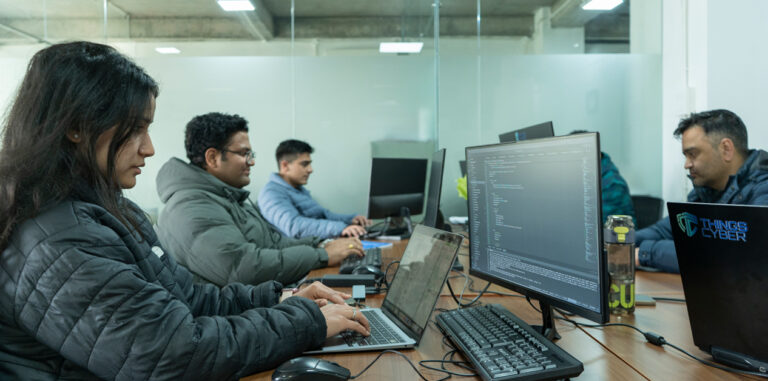
Things Cyber, an IT company providing cybersecurity services. Photo: Bikram Rai
Rimal states that if all households were to run domestic electrical appliances simultaneously, Nepal’s power grid would currently struggle to cope, meaning the energy demand for an AI data center is unsustainable. “An AI data center requires electricity every single second; given our limited energy capacity, operating a large data center under current conditions is impossible.”
IT expert Subba suggests that Nepal should establish a data center only after studying its capacity and purpose. He says, “It would be appropriate for us to operate a moderately sized green data center in a secure place equipped with water, light, and a cool climate.”
Electronic components used in AI data centers are cyclical in nature. Broken, damaged, and obsolete electronic waste (e-waste) must be properly managed. However, Nepal has not yet enacted laws regarding electronic waste management.
Rimal notes that rather than rushing to construct an AI data center, the government should strengthen necessary legal foundations such as data center policies, data protection, management, and cybersecurity laws. “Initially, we should have built the legal foundation, but the government seems focused on rushing into physical infrastructure,” he says. “Operating a data center is a bigger challenge than building its infrastructure.”
AI scientist Suresh Manandhar states that the electrical infrastructure required to keep a data center running must be made reliable and sustainable first. “If an AI data center’s computer stops working for even a second, it disrupts service delivery. Therefore, the government must ensure regular electricity; solar energy could be an alternative,” he says.