Kathmandu
Saturday, July 25, 2026





A rushed 1998 aircraft lease by Nepal Airlines Corporation with a fake US firm, Chase Air, turned into a cross-border wire fraud—costing hundreds of thousands of dollars, triggering US court action, and exposing deep flaws in state procurement.
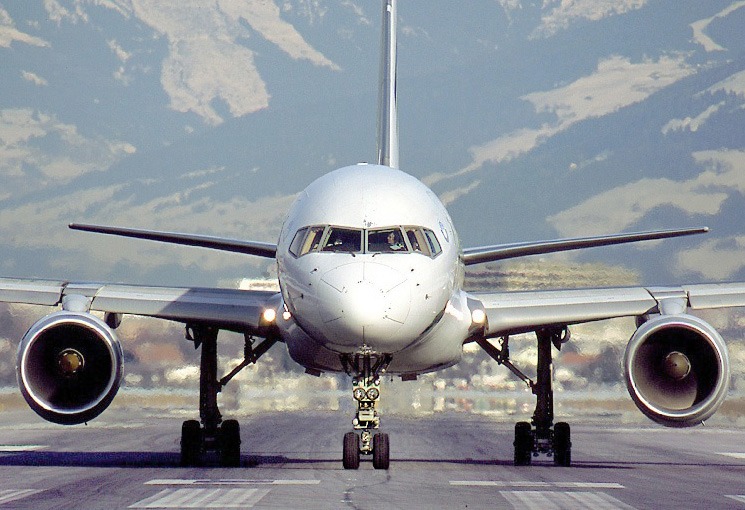
KATHMANDU: In late 1998, Royal Nepal Airlines Corporation (RNAC, now Nepal Airlines) urgently needed a Boeing 757 to meet peak tourist-season demand after returning a leased aircraft. Officials signed a lease agreement with Chase Air, a purported American company, and wired an advance payment of $783,750. The aircraft never arrived, and the funds disappeared through a chain of fraudulent international wire transfers.
What initially appeared to be a routine aircraft leasing arrangement turned out to be a sophisticated international wire-fraud scheme orchestrated by a US-based operator using forged documents. The case exposed serious vulnerabilities in Nepal’s state-owned airline procurement system and led to swift civil and criminal proceedings in New York courts. Partial funds were later recovered through legal action in the United States, but the episode triggered years of domestic investigation and highlighted the risks of cross-border aviation transactions.
Nepal Airlines Corporation’s history is marked by repeated episodes of scandal and corruption, but few stand out as starkly as the 1998 Chase Air scandal. In a deal that bypassed basic due diligence, the state-owned carrier paid $783,750 in advance to lease a Boeing 757 from a company that had neither an aircraft nor a verifiable office. The aircraft never arrived, and the money was never returned.
The agreement was signed during the coalition government of Prime Minister Girija Prasad Koirala, with tourism affairs overseen at the time by Yamalal Kandel. A politically connected chairman, Hong Kong Rana Magar—linked to CPN-ML general secretary Bamdev Gautam—reportedly facilitated the lease agreement with “Chase Air,” a firm that existed only on paper.
The episode established a long-standing pattern in the institution: politically influenced appointments, opaque contracting processes, and limited accountability despite significant financial losses. As investigations later highlighted, the scandal was not an isolated failure but part of a recurring structural problem that has continued to affect the airline over the decades.
Here is Nepal News’s concise explainer on what you need to know about Nepal Airlines Corporation’s Chase Air Scandal.
What was Chase Air, including its history, formation, and current status?
Chase Air was a short-lived shell company created solely as a vehicle for fraud, with no genuine aviation operations, fleet, or legitimate business activity. It was formed in early 1998 in Arlington, Texas, by Cecil Winters, who operated it virtually alone from a small rented office equipped only with a fax machine and a cell phone that he personally answered.
The company maintained a basic website and presented itself as an aircraft leasing firm capable of providing commercial jets like the Boeing 757.
In reality, it had no aircraft, no employees beyond Winters, no verifiable financial backing, and no history of legitimate transactions in the aviation industry.
The entity’s sole purpose appears to have been to deceive parties seeking quick aircraft leases by using forged documents and false assurances. After the 1998 scam involving Royal Nepal Airlines, Chase Air ceased all activity and effectively dissolved without any formal ongoing operations.
As of 2026, the company has no current status, assets, or presence in the aviation sector; it exists only as a historical footnote in fraud cases. No records indicate revival or legitimate successor entities, and Winters’ later low-profile activities (if any) were unrelated to aviation leasing.
This ephemeral nature made it a classic example of a fly-by-night operation designed to exploit urgent international deals before disappearing once funds were secured.
What exactly was the Chase Air scam involving Nepal Airlines?
The Chase Air scam was a sophisticated wire-fraud operation in which a shell company posed as a legitimate US aircraft lessor to extract an advance payment from Nepal’s flag carrier.
In October 1998, RNAC, facing an aircraft shortage during the busy tourist season, entered a lease deal for a Boeing 757. After transferring $783,750 as the first month’s lease payment plus guarantee, the promised aircraft failed to materialize.
Investigations later revealed the entire arrangement relied on fabricated paperwork, including a falsified FAA registration certificate and a non-existent air-carrier certificate.
The perpetrator diverted the funds through multiple US brokerage and bank accounts before authorities could intervene. The scam not only caused immediate financial loss to RNAC but also damaged the airline’s operational credibility at a time when it was already struggling with fleet modernization.
It underscored how easily international fraudsters could exploit urgent procurement needs in developing nations’ aviation sectors, where oversight of foreign lessors was limited and political pressure for quick fixes often bypassed standard due diligence.
The episode became a textbook case of aviation-related advance-payment fraud, prompting global awareness about vetting lessors through independent registries and escrow mechanisms rather than direct wire transfers.
When and how did the agreement with Chase Air come about?
The agreement was signed on October 17, 1998, in a rushed process driven by RNAC’s immediate fleet requirements after an earlier Boeing 727 lease expired. Singapore-based broker Zahir Hussain from Sky Link Aviation Services facilitated initial contacts, presenting Chase Air as a credible US entity capable of delivering a Boeing 757 promptly.
RNAC’s management, under pressure to maintain international routes, negotiated terms that included an advance payment and a bank guarantee. Within days, on October 20, 1998, the airline wired the funds to a New York bank account controlled by Chase Air. Pilots were dispatched to Frankfurt to take delivery, but the aircraft never appeared.
The timeline was compressed due to seasonal demand, with minimal background checks on the lessor. This haste allowed the fraudster to exploit the airline’s operational urgency without triggering red flags that might arise from prolonged scrutiny. The deal bypassed competitive bidding or independent verification, reflecting the era’s less stringent procurement norms in Nepal’s state enterprises.
Who was Cecil Winters and what role did he play?
Cecil Winters was the sole operator and self-styled president of Chase Air, a newly incorporated entity established earlier in 1998 in Arlington, Texas.
Operating virtually alone from a small rented office with only a fax machine and cell phone, he presented himself as the company’s chief executive. Winters personally signed the lease agreement with RNAC and handled all communications, including false assurances about technical delays and bank guarantees.
Winters orchestrated the forgery of key documents, such as altering an FAA registration to show Chase Air ownership of the Boeing 757 actually held by another Florida-based firm.
After receiving the wired funds, Winters directed transfers to personal associates’ accounts across Texas and Alabama, using the money to settle old debts and attempt luxury purchases like a boat.
His background included prior fraudulent activities, making him a repeat offender who relied on isolation—no visible partners or family support appeared during proceedings. Winters’ lone-wolf approach allowed him to maintain the facade briefly but ultimately led to his rapid identification once investigators traced the money trail.
How much money was transferred and what happened to it?
RNAC transferred exactly $783,750 on October 20, 1998, as the advance lease payment. Within hours, Winters instructed his brokerage firm to split and redirect the funds. Approximately $448,375 went to a joint account in Dallas belonging to associates; the remainder was routed through additional accounts, including one in Birmingham, Alabama, linked to his lawyers.
Some portions paid prior legal fees, while others funded attempted personal acquisitions. Only about $3,000 remained frozen in one account due to a clerical error in transfer instructions. Through aggressive US civil action, roughly $431,300 was recovered and wired back to RNAC by January 1999. The rest was dissipated before full tracing, highlighting how quickly layered transfers can obscure funds.
This partial recovery demonstrated effective cross-border legal coordination but also showed the permanent loss of hundreds of thousands of dollars in taxpayer-funded airline resources, money that could have supported genuine fleet upgrades or operational improvements.
What forged documents were used in the scam?
Winters relied on two primary forgeries to build credibility. First, he altered an existing FAA registration certificate for a Boeing 757 owned by Florida’s A.P.F. Group, using white-out and re-typing to insert Chase Air’s name as the registered owner.
Second, he fabricated an air-carrier certificate falsely attributing operational authority to a non-jet airline (Leiker Airways), which only flew smaller Douglas aircraft. These documents were presented to RNAC alongside a lease agreement and pilot-crew assurances. A fake company website and Arlington office address further supported the illusion.
FBI analysis confirmed the alterations through forensic examination, revealing the documents’ role in deceiving RNAC’s technical evaluators.
The forgeries exploited the difficulty of real-time international verification in 1998, before widespread digital registries.
Their exposure dismantled the scam’s foundation and illustrated how sophisticated document tampering could mimic legitimate aviation transactions, fooling even experienced airline personnel under time pressure.
How was the fraud discovered by RNAC officials?
RNAC pilots arrived in Frankfurt expecting the aircraft but found nothing. Senior executives, including then-executive director Hong Kong Rana and chairman, grew alarmed and contacted New York lawyers, including Nepali-American attorney Khagendra Gharti Kshetry.
Follow-up calls to Winters yielded evasive excuses about “technical difficulties” in Ireland. When RNAC demanded the bank guarantee or refund, Winters sent fake fax confirmations addressed only to the airline, not the bank.
Further inquiries to the actual aircraft owner in Florida revealed he had no knowledge of RNAC and was awaiting payment from another party. Broker Zahir Hussain’s arrival in New York for damage control and independent tracing of wire transfers confirmed the funds had been diverted.
This multi-step verification process—combining on-site absence of the plane, contradictory statements, and financial tracing—quickly exposed the deception within weeks of the payment.
What actions were taken in the US to recover the funds?
RNAC’s US legal team immediately filed a civil suit in Manhattan’s Southern District Court seeking a temporary restraining order to freeze Chase Air’s accounts. A same-day court order halted further dissipation, allowing subpoenas to the brokerage firm holding the funds.
Private investigators, including former police officer Dedy Stonley, traced every wire transfer across states. The FBI’s New York office, led by Special Agent Carla L. Holmes, launched a parallel criminal probe after being notified of the fraud. Subpoenas targeted banks in Texas and Alabama, freezing remaining balances.
Civil proceedings compelled document production and account details, while criminal charges enabled arrests. These coordinated efforts—civil asset preservation followed by federal investigation—secured rapid partial recovery and prevented total loss.
The process exemplified efficient US judicial response to international fraud complaints involving substantial sums.
What was the outcome of the civil lawsuit in New York?
On January 15, 1999, the Southern District Court ruled in RNAC’s favor in the civil case. Winters offered no defense. The judge ordered Chase Air and Winters jointly liable for the full $783,750 principal, plus $416,655 in interest, $495,000 in legal fees, and other costs, totaling approximately $1.695 million (judgment enforceable for 20 years, renewable).
The frozen brokerage funds—about $431,300—were released to RNAC shortly afterward via wire transfer to its New York bank account. This swift civil victory provided immediate financial relief and set the stage for criminal proceedings.
The judgment’s long enforceability period allowed future asset seizures if Winters acquired property later, demonstrating how US courts prioritize victim restitution in fraud cases while imposing broad liability on shell entities and their controllers.
What were the criminal charges and verdict against Cecil Winters?
Winters was arrested in December 1998 at a Florida boat show after FBI tracking of his cell phone. Charged with wire fraud under federal law for using interstate wires (faxes, calls, transfers) to execute the scheme, he faced trial in the Southern District of New York before Judge Michael Mukasey.
On November 15, 1999, the jury convicted him. Sentencing occurred later, imposing 24 months imprisonment, three years supervised release, and restitution of $440,339 payable at $4,000–$10,000 monthly.
He served time first in Manhattan’s Metropolitan Correctional Center (nearly a year pre-trial due to denied bail over flight risk and lack of community ties), then transferred to a Florida federal facility.
The verdict affirmed intentional deception through forged documents and false representations to defraud a foreign government entity.
Who were the key Nepali officials implicated in Nepal?
Investigations in Nepal focused on RNAC’s board and management at the time, including the then executive director Hong Kong Rana, who oversaw the deal.
The then Tourism Minister Yam Lal Kandel of the then CPN (ML), serving under the Girija Prasad Koirala government, faced scrutiny for alleged oversight lapses. Other board members and procurement officials were questioned for approving the non-competitive lease without adequate verification.
The Commission for the Investigation of Abuse of Authority (CIAA) and Special Court examined whether political influence or negligence enabled the rushed transaction. While some faced initial charges of corruption and causing financial loss to a state enterprise, proceedings centered on individual accountability rather than systemic procurement flaws. Rana emerged as the primary defendant in domestic litigation due to his direct executive role.
What was the role of Hong Kong Rana?
As RNAC’s executive director in 1998, Hong Kong Rana held operational responsibility for fleet management and lease decisions. He participated in negotiations facilitated by the Singapore broker and authorized the advance payment amid urgent aircraft needs.
Prosecutors alleged his involvement allowed the irregular deal to proceed without sufficient safeguards, contributing to the financial loss. Rana maintained he acted in good faith based on presented documents and broker assurances, denying personal corruption.
Rana’s position placed him at the center of both operational decisions and subsequent accountability probes, making him a focal point for Nepal’s anti-graft bodies seeking to address perceived mismanagement in state aviation contracts.
What did the Special Court rule?
The Special Court, handling corruption cases involving public officials, convicted Hong Kong Rana around 2003 after a prolonged trial. It found him guilty of corruption-related offenses tied to the 1998 lease, sentencing him to three years imprisonment.
The ruling cited failures in due diligence and approval of a high-risk transaction that resulted in substantial loss to RNAC’s public funds.
Judges determined the evidence showed negligence or complicity in a deal lacking transparency, aligning with broader efforts to hold state enterprise leaders accountable for procurement irregularities during that political period.
The verdict reflected judicial emphasis on protecting public assets from avoidable foreign scams.
Why and how was Hong Kong Rana acquitted by the Supreme Court?
On March 25, 2009, Nepal’s Supreme Court, in a joint bench decision by Justices Anup Raj Sharma and Mohan Prakash Sitaula, overturned the Special Court conviction and acquitted Rana.
Acting on his appeal, the higher court reviewed evidence and found insufficient proof of personal corrupt intent or direct benefit. Judges ruled the transaction, while flawed, did not meet the legal threshold for criminal corruption under the circumstances, emphasizing lack of conclusive links between Rana’s actions and deliberate fraud facilitation.
The clean chit ended years of legal proceedings against him, highlighting appellate scrutiny of lower-court findings in high-profile public-official cases.
What was the involvement of the tourism minister?

Yam Lal Kandel, who was tourism minister at the time of the scandal in 1998, is now the Chief Minister of Karnali Province.
Yam Lal Kandel served as tourism minister under the Nepali Congress-Communist Party of Nepal (Marxist Leninist) coalition government when the 1998 deal occurred. His ministry oversaw RNAC policy, and critics questioned whether ministerial approval or political climate encouraged rapid leasing without rigorous checks.
While not directly charged in the primary US proceedings, Kandel’s role came under domestic review as part of broader inquiries into government influence on state corporations.
No conviction resulted from his involvement, but the scandal fueled public debate about ministerial responsibility for enterprise decisions during coalition governments.
It illustrated how aviation policy decisions could intersect with procurement vulnerabilities under time-sensitive operational pressures.
How much money was ultimately recovered by Nepal Airlines?
Through US civil action, RNAC recovered approximately $431,300 of the original $783,750 by late January 1999, after court-ordered release of frozen brokerage funds.
Additional restitution was ordered in the criminal case ($440,339 total), though collection proved challenging given Winters’ limited assets. Overall, roughly 55 percent of the principal was returned directly, with interest and fees awarded but only partially realized.
The net loss, after legal costs, underscored incomplete recovery in cross-border fraud despite strong US judicial support.
Recovered sums helped offset some immediate operational shortfalls but could not fully restore the airline’s financial position or replace the lost aircraft capacity.
What lessons were learned or changes made in aircraft leasing after the scam?
The scandal prompted RNAC and Nepali authorities to advocate for stricter lease protocols, including mandatory competitive tenders, independent lessor verification through aviation registries, and escrow arrangements for advances.
The CIAA recommended formalized due-diligence processes for foreign contracts to prevent similar advance-payment risks.
It influenced later aviation procurement guidelines emphasizing transparency and reduced political interference in state airline decisions.
Public discourse highlighted the need for specialized legal and technical expertise in international deals. While not all recommendations were immediately implemented, the case contributed to heightened caution in subsequent leases, such as later wide-body acquisitions, and reinforced calls for insulating commercial operations from short-term political pressures.
What is the current status of the Chase Air case?
The Chase Air case is fully resolved. In the US, Winters completed his 24-month prison sentence by around 2001–2002, followed by supervised release. Restitution obligations remain on record but appear largely uncollected beyond initial recoveries due to his financial situation.
In Nepal, the Supreme Court’s 2009 acquittal of Hong Kong Rana closed domestic prosecutions, with no further appeals or reopenings. No active investigations or claims persist as of 2026.
The episode serves as historical precedent in Nepal’s aviation corruption annals, occasionally referenced in discussions of past scandals like Lauda Air or wide-body deals, but carries no ongoing legal, financial, or operational implications for Nepal Airlines.
It remains a closed chapter illustrating early 21st-century vulnerabilities in global aircraft leasing.